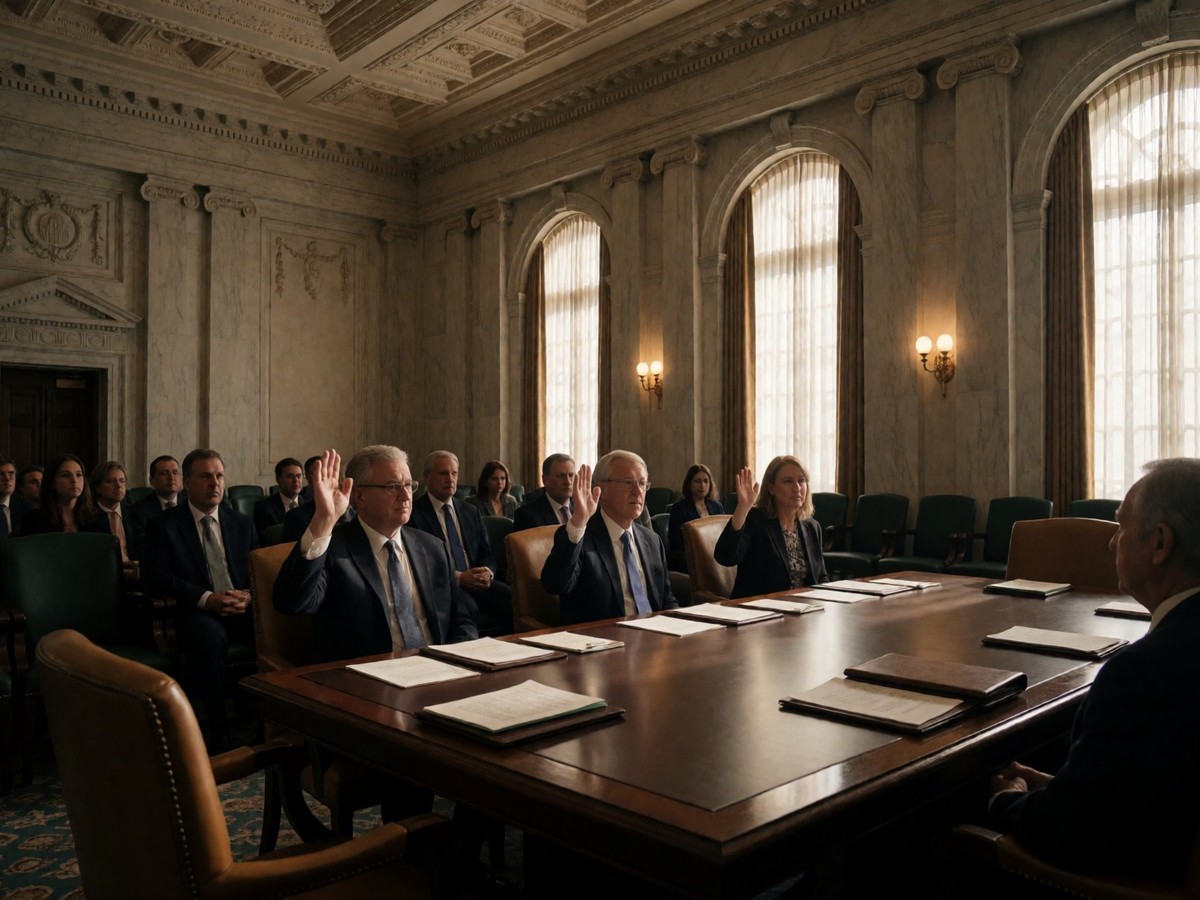
The Federal Open Market Committee voted 9-3 to keep the federal funds rate in a range between 3.5% and 3.75% in June. Three regional presidents – Beth Hammack, Neel Kashkari, and Lorie Logan – voted against this decision. They preferred to raise the target range for the federal funds rate by 0.25 percentage points at that meeting. These dissenters argued that inflation remains above the 2% target after five years of elevated readings. The committee faces a split between those prioritizing labor market stability and those fearing a return of inflation.
The policy split remains deep.
Governor Adriana Kugler monitors how trade policy changes influence inflation. A 20 percentage point increase in tariffs on Chinese imports earlier this year raised core PCE prices by 0.2 percent from February through April. Core goods inflation rose at a 0.2 percent annual rate in the 12 months through April. This is a reversal from April 2024, when core goods prices fell 0.5 percent over the previous 12 months. She notes that the pass-through of tariffs into prices happens quickly. Higher tariffs on other countries could also raise inflation for the rest of the year.
Kugler also examines services inflation. The PCE price index for housing services fell from 5.7 percent in April 2024 to 4.2 percent in April 2025. Core services excluding housing fell from 3.6 percent in April 2024 to 3 percent in April 2025. While these figures show disinflation, they remain above pre-pandemic levels. The FOMC’s preferred inflation gauge grew at 2.1 percent in April, but energy price declines dragged this number down. Core inflation was 2.5 percent in April.
Vice Chair Philip Jefferson views the economy with cautious optimism. Gross domestic product rose at an annual rate of 4.3 percent in the third quarter of 2025. This growth followed a sharp acceleration in the first half of last year. Jefferson expects the economy to expand at a rate of about 2 percent in the near term. He believes current policy sits in a range consistent with the neutral rate.
The labor market shows signs of stability. Job growth moderated last year, and the unemployment rate edged higher. The unemployment rate ended 2025 at 4.4 percent, which was an increase from the 4.1 percent rate at the end of 2024. In November and December 2025, employers added about 50,000 jobs to payrolls each month. This followed a decline in payrolls in October. Jefferson noted that there were 0.9 available jobs in November for every unemployed American. This ratio is lower than the levels seen during the pandemic recovery.
Internal disagreements among governors signal a lack of unity. Governor Michelle Bowman dissented in September 2024, preferring a 25-basis-point rate cut. Stephen Miran dissented in three meetings, calling for 50-basis-point cuts. Miran’s term ends on January 31, 2026.
The disagreement between governors and regional presidents creates a difficult environment for policy planning.
| Policy Member | Perceived Tilt |
|---|---|
| Beth Hammack | Hawkish |
| Neel Kashkari | Neutral |
| Lorie Logan | Hawkish |
Beth Hammack and Lorie Logan favor more restrictive policy. Hammack believes that easing policy could support risky lending and increase financial stability risks. She says inflation is trending in the wrong direction. She also argues that easing policy could boost valuations and delay the discovery of weak lending practices in credit markets.
The committee must weigh these views.
The labor market remains resilient. Employers added 177,000 jobs in April. The unemployment rate was 4.2 percent in April, which is within the 4 percent to 4.2 percent range seen since May 2024. This rate is stable. Private-sector forecasters predicted 130,000 new jobs for May.
While layoffs remained low through the final week of May, other measures suggest modest increases. Worker Adjustment and Retraining Notifications of layoffs have increased since the beginning of the year. Mentions of layoffs in the Fed’s Beige Book survey and Challenger, Gray and Christmas data also increased. The vacancy rate was 4.4 percent in April. This is down from a peak of 7.4 percent three years ago. The quits rate was between 1.9 and 2.2 percent.
Consumers expect prices to continue rising. The July 2026 Survey of Consumer Expectations shows one-year inflation expectations at 3.6 percent. Median inflation uncertainty at the one-year and five-year horizons decreased.
| Consumer Expectation | July 2026 Value |
|---|---|
| One-Year Inflation | 3.6% |
| Three-Year Inflation | 3.3% |
| Five-Year Inflation | 3.0% |
| Gas Price Growth | 2.9% |
| Rent Growth | 5.9% |
| Medical Care Growth | 8.9% |
Gas price growth expectations reached 2.9 percent. Rent expectations were 5.9 percent. Medical care expectations were 8.9 percent. Food expectations remained at 5.0 percent. Home price growth expectations were 3.2 percent.
You should watch the upcoming data revisions.
The probability of losing a job in the next 12 months is 14.2 percent. This is below the 12-month trailing average of 14.5 percent. The probability of finding a job if a person loses their current job is 46.2 percent. This figure is higher for those with at most a high school degree. The probability of leaving a job voluntarily is 18.6 percent.
Inflation remains high.
The Supreme Court ruled in favor of Governor Lisa Cook in the Trump v. Cook case. The court blocked the President’s attempt to remove her without cause. Chief Justice Roberts said that accepting the government’s position would transform the for-cause protection into at-will employment. He said this would be an interpretive leap out of step with the statute.
The ruling protects the independence of the Federal Reserve. The decision ensures that the President cannot easily pack the board with loyalists. This case arrived after the White House issued an order of removal for Cook last August. A federal court had blocked that order. The Supreme Court decision prevents the President from using manufactured pretexts to influence interest rate decisions.
The policy split remains deep.
Leave a Reply