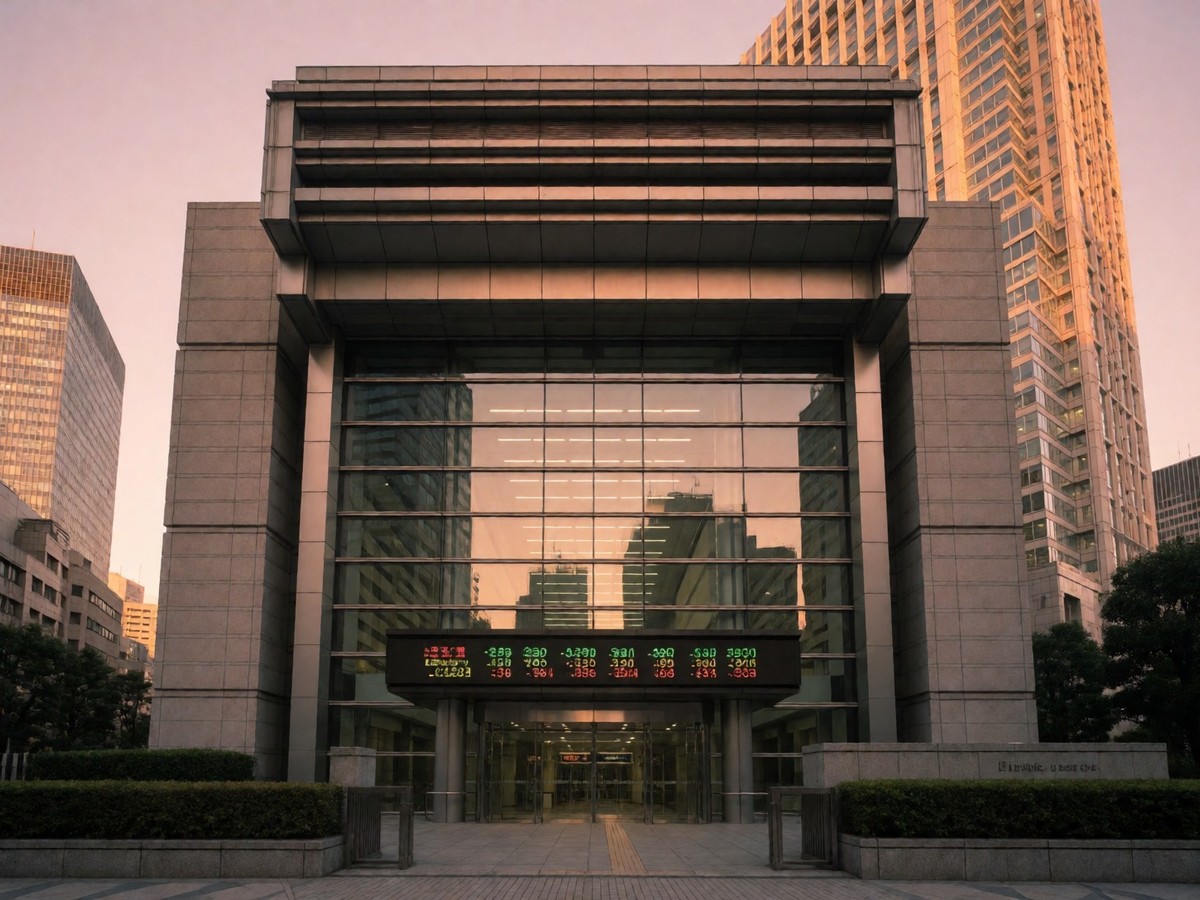
Berkshire Hathaway crossed the 10% voting threshold in Sumitomo Corp and Marubeni Corp on May 7, 2026. The conglomerate now owns more than 10% of all five Japanese trading houses it has held since 2020. The five companies include Itochu, Marubeni, Mitsubishi, Mitsui, and Sumitomo. National Indemnity Company increased its Sumitomo stake to 10.05% from 9.30%. Marubeni moved from 9.32% to 10.10%. Itochu Corporation crossed 10.07%. These diversified conglomerates import raw materials and finance domestic industry. They also operate businesses across energy, metals, food, and chemicals.
The TOPIX reform stages
The Tokyo Stock Exchange (TSE) manages the TOPIX reform in two distinct stages to improve index functionality. Phase 1 focused on listing segments and market capitalization. This phase began in 2022 and targets the exclusion of constituents with a free-float market cap below ¥10bn. The TSE expects this process to reduce the number of index constituents from about 2200 to approximately 1700 by January 2025.
| Feature | Phase 1 Criteria | Phase 2 Criteria (Implementation through 2028) |
|---|---|---|
| Target Constituents | Top FFMC excluding cross-shareholdings | Top 96% of cumulative FFMC |
| Minimum FFMC | Exclude < ¥10bn | Exclude bottom 3% of current constituents |
| Liquidity Requirement | Not the primary focus | Annual Traded Value > 0.2 to include; > 0.14 to avoid exclusion |
| Number of Stocks | ~1700 by Jan 2025 | ~1200 by July 2028 |
| Market Segment | Prime, Standard, Growth | Prime, Standard, Growth |
The second stage of revisions introduces a tighter liquidity filter that the TSE will implement through 2028. Companies that fail to meet the new cut-off criteria face gradual weight reductions in the index. This reduction process begins in October 2026 and continues on a quarterly basis through July 2028. The TSE will conduct annual reviews on the last business day of October. For new listings, the index requires the stock to be in the top 95% of cumulative FFMC.
The transition is gradual.
Liquidity and index shifts
The second stage of revisions introduces a tighter liquidity filter that the TSE will implement through 2028. Companies that fail to meet the new cut-off criteria face gradual weight reductions in the index. This reduction process begins in October 2026 and continues on a quarterly basis through July 2028. The TSE will conduct annual reviews on the last business day of October. For new listings, the index requires the stock to be in the top 95% of cumulative FFMC.
You should note that the requirements to stay in the index remain slightly more lax than the requirements to be included initially.
Market concentration risks
Concentration in the Japanese market increased significantly over the last year. Between July 2025 and July 2026, the ten largest companies’ share of the Nikkei rose from 40.9 percent to 48.7 percent. The three largest sectors’ share also rose from 63.7 percent to 70.8 percent. This trend mirrors the concentration risks seen in South Korea. In South Korea, the KOSPI 200 index contains hundreds of companies, but Samsung Electronics and SK Hynix represent more than 50 percent of its market capitalization. The concentration in the KOSPI index is even more striking because both Samsung Electronics and SK Hynix are major players in the semiconductor industry, yet the index plummeted by over 20 percent after recent earnings reports. Concentration creates risks. Will the concentration in the Nikkei trigger a Korean-style meltdown?
Regulatory shifts in governance
Spring 2026 brought a coordinated review of Japan’s corporate governance. The Ministry of Justice (MoJ) proposed lowering the squeeze-out threshold from 90% to 66.7%. This change affects how companies handle going-private transactions. The Financial Services Agency (FSA) also proposed revisions to the Corporate Governance Code. These revisions include the removal or dilution of Principles 1.5, 1.6, and 1.7. These principles previously addressed anti-takeover measures, capital policies harmful to shareholders, and related-party transactions. The interaction between the MoJ proposal to lower the squeeze-out threshold to 66.7% and the FSA’s plan to move Principles 1.5 through 1.7 into non-binding Interpretive Guidance creates a structural risk. Controlling blocs could reach the new 66.7% threshold without broad minority support because they often hold up to 40% to 50% of shares. This is exacerbated by cross-shareholdings. The FSA’s plan to move Principles 1.5 through 1.7 into non-binding Interpretive Guidance reduces the proactive expectations on boards.
Buffett and the trading houses
Buffett targets companies with low prices and healthy dividends. The five trading houses provide a margin of safety through cheap yen borrowings. Mitsui trades at 8.6 times earnings. Mitsubishi trades at 10.3 times earnings and 1.16 times book. Sumitomo trades at 10.6 times earnings and 0.9 times book. Itochu fetches 12.1 times earnings and 1.8 times book. Marubeni trades at 9.03 times earnings and 1.13 times book. Total yields for these companies remain attractive. Mitsubishi’s total yield reached 7.84% and Mitsui’s reached 7.25%. Marubeni’s total yield reached 4.75%. Sumitomo and Itochu provided yields of 4.58% and 4.32% respectively. Buffett chose the five largest companies in the industry to manage his $5 billion investment. Only 13 of the 84 Japanese trading companies have market capitalizations over $1 billion. These companies use operating cash flow and funds from divestments rather than insurance premiums. The companies benefit from a weaker yen. Buffett buys value.