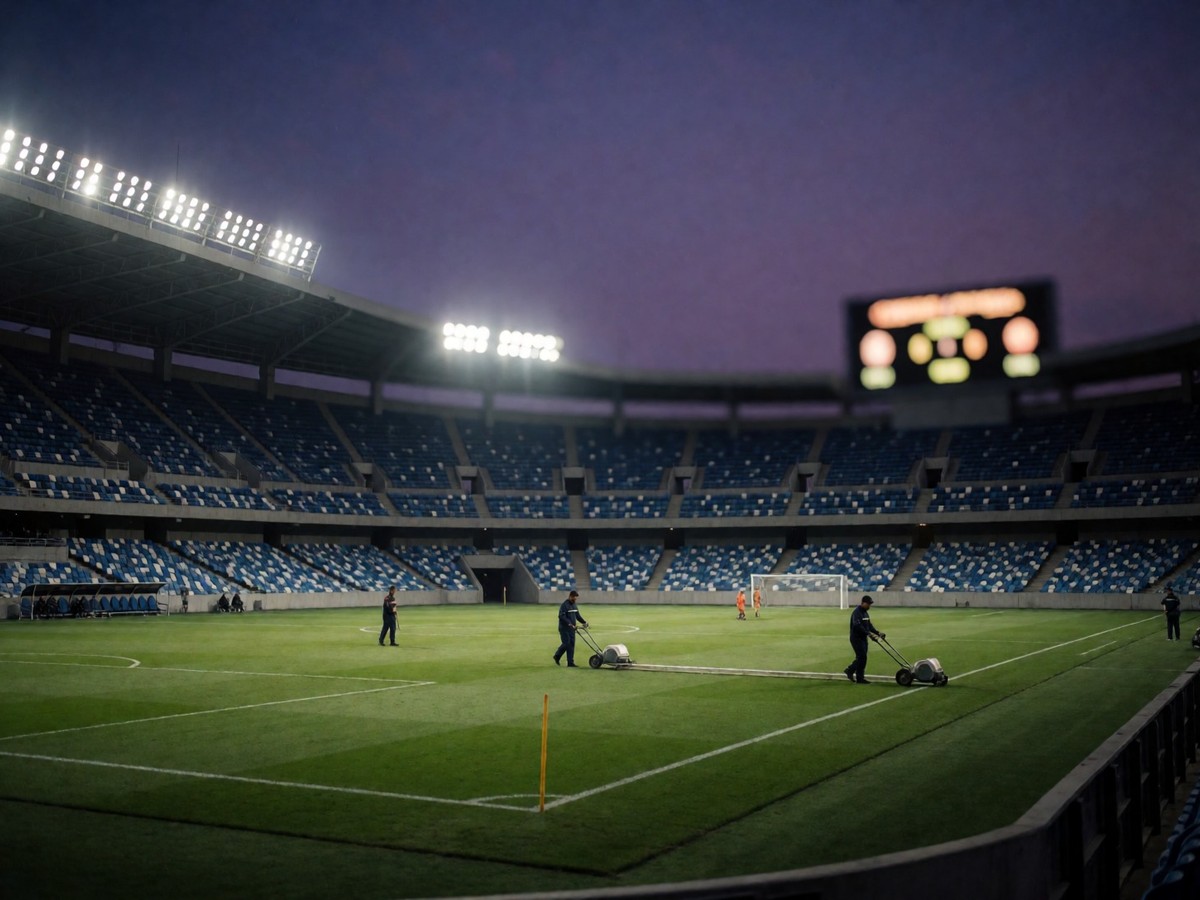
FIFA plans to expand the men’s World Cup to 64 teams, a move that increases the total match count to 128. The 2026 tournament uses 104 matches. This growth requires a six-week tournament. The 2030 World Cup involves six host nations across three continents. It begins with opening matches in Uruguay, Argentina, and Paraguay. Spain, Portugal, and Morocco host the majority of the remaining games. While the 48-team tournament in 2026 uses 15 stadia for 104 games, a 64-team tournament would necessitate 20 grounds to handle 128 matches across its extended duration. This expansion creates a massive burden for host nations. Approximately 1.25 million people must travel across these six countries.
The decision stays unsettled.
Financial influence and political tension
FIFA President Gianni Infantino pushes for expansion to grow revenue. More games allow FIFA to sell more tickets and merchandise. This revenue funds multimillion-dollar handouts to each of the 211 member associations. The 2022 tournament delivered 7.5 billion dollars in revenue. Expansion to 64 teams increases the number of matches and the money FIFA collects. UEFA President Aleksander Ceferin and AFC President Sheikh Salman bin Ibrahim Al Khalifa oppose this expansion. They argue that easier qualification reduces the commercial value of regional qualifying competitions. If broadcasters place less value on qualifying campaigns, regional confederations become more dependent on FIFA distributions. This shifts financial influence toward the global governing body.
Money drives this.
Player wellness and the heat factor
The physical toll on players is real. You already know how much a long season exhausts a squad. Players like Julian Alvarez have played 274 times since February 2022. Chelsea played 113 games in the 2024-25 season. Real Madrid played 114 games. 86% of players want at least 14 days of preparation time. 61% want 14 to 28 days of post-tournament recovery. The gap between the Champions League final on May 30 and the World Cup opening on June 11 is only 12 days. Players face extreme workloads.
The quality drops.
Extreme heat in Miami and Houston adds to the strain. In humid conditions, the body struggles to release heat. During vigorous exercise, the body generates heat 15 to 20 times faster than at rest. Core temperatures can rise 1.8 degrees Fahrenheit every five minutes. A core temperature above 104.9 degrees Fahrenheit is a medical emergency. Heat stroke can lead to confusion, disorientation, or a loss of consciousness. In extreme cases, mortality from exertional heat stroke exceeds 80%.
Will FIFA prioritize revenue over the very players who create the product?
Competitive balance and tournament integrity
The 2026 World Cup showed how expansion affects competition. The tournament had 308 goals, compared to 172 in the 2022 edition. The average was 2.96 goals per game. However, the talent gap remains wide. Cabo Verde, Curacao, Uzbekistan, and Jordan were all first-time qualifiers in 2026. None of them won a single match. The tournament becomes predictable. The 64-team format removes the third-place qualification route. Teams would only advance if they finish in the top two of their group.
The math remains simple.
The expansion to 64 teams is a logistical and physiological disaster. More matches mean more pressure on domestic leagues that follow a traditional August-to-May season. The 2031 Women’s World Cup will likely move to 48 teams in the United States. FIFA continues to push for more games despite the backlash. The 2030 centenary will host 16 more teams than the 2026 edition. This creates 96 group stage matches instead of 72. Expanding the field makes the tournament more expensive for national federations. The French Football Federation expected to spend 28 million dollars on the 2026 tournament. A 64-team event increases these costs.