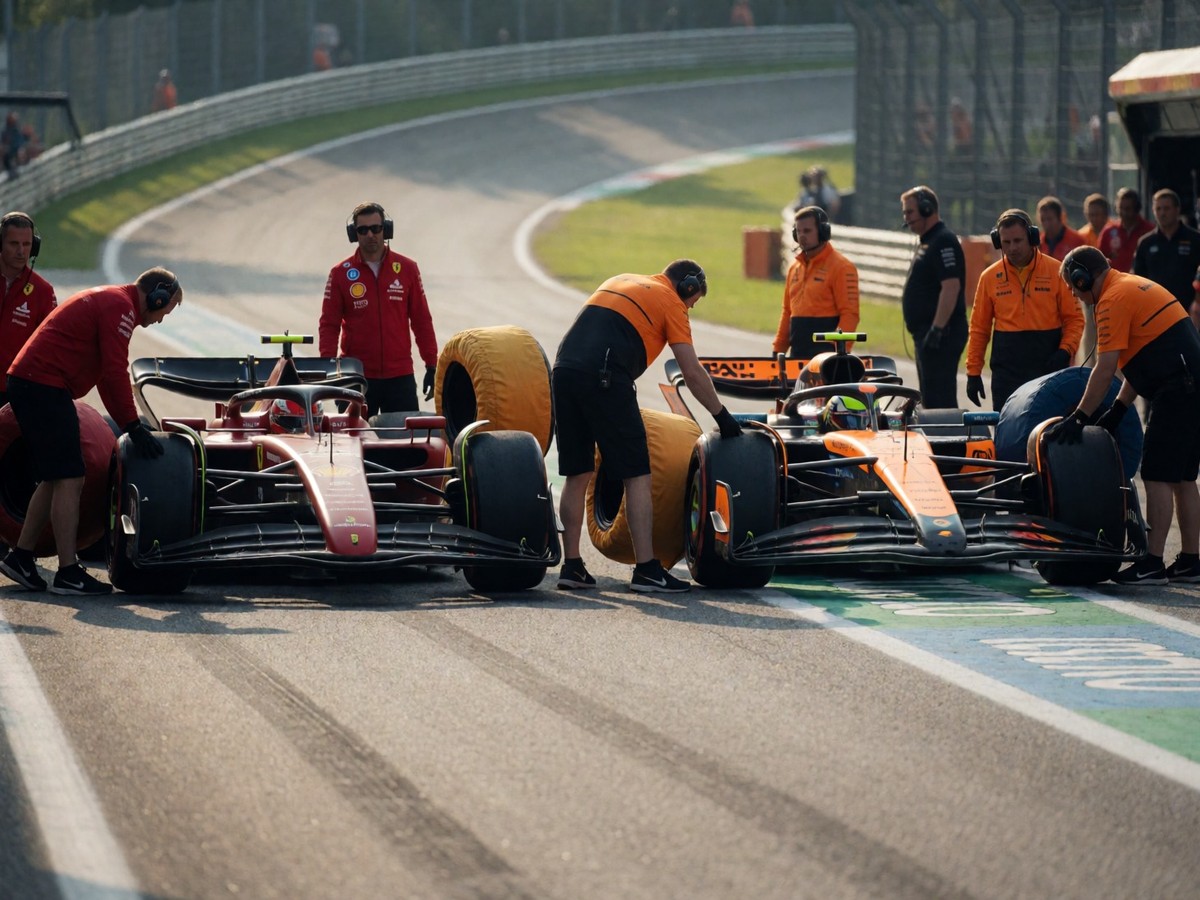
Pirelli removed the C6 compound from the 2026 dry-tire roster.
Because the performance difference between the C5 and the C6 prototypes offered no significant advantage, Pirelli decided to drop the C6 compound from the 2026 dry-tire roster entirely. Testing with mule cars following the 2025 Mexico Grand Prix showed that the performance gap between the C5 and the C6 prototypes was too small to justify the extra tire. The FIA approved this decision to limit the available dry compounds to five: C1, C2, C3, C4, and C5. This change follows tire development that concluded on September 1, 2025.
New tire dimensions and specifications
The 2026 regulations change the physical dimensions of the tires. Front tires measure 25mm narrower than the current versions. Rear tires measure 30mm narrower than the current versions. These adjustments accommodate the move to 18-inch wheels.
| Specification | Dimension Change |
|---|---|
| Front Tires | 25mm narrower |
| Rear Tires | 30mm narrower |
| Total Dry Compounds | 5 (C1 to C5) |
Teams must adapt their race weekend setups to these new measurements. The reduction in tire range means that qualifying and race simulations must adjust to different wear rates.
The 2026 Sprint calendar
The 2026 season includes six Sprint weekends. These events are spread across the calendar to provide additional racing.
| Date | Grand Prix |
|---|---|
| March 13-15 | China (Shanghai) |
| May 1-3 | USA (Miami) |
| May 22-24 | Canada (Montreal) |
| July 3-5 | Great Britain (Silverstone) |
| August 21-23 | Netherlands (Zandvoort) |
| October 9-11 | Singapore (Marina Bay) |
The Sprint format provides a shorter version of the Grand Prix. The race covers 100km, which is about one-third of a standard Grand Prix distance. The race lasts approximately 30 minutes. There are no mandatory pit stops during the Sprint.
The Sprint awards points to the top eight finishers. These points count toward the Drivers’ and Constructors’ World Championship standings.
| Position | Grand Prix Points | Sprint Points |
|---|---|---|
| 1st | 25 | 8 |
| 2nd | 18 | 7 |
| 3rd | 15 | 6 |
| 4th | 12 | 5 |
| 5th | 10 | 4 |
| 6th | 8 | 3 |
| 7th | 6 | 2 |
| 8th | 4 | 1 |
| 9th | 2 | 0 |
| 10th | 1 | 0 |
Sprint Qualifying and tire requirements
Sprint Qualifying uses a three-part format. The segments last 12 minutes for SQ1, 10 minutes for SQ2, and 8 minutes for SQ3. Seven-minute intervals separate each section. The six slowest drivers exit SQ1 and SQ2. The top 10 drivers enter SQ3 to compete for Sprint Pole. Teams use Medium tires for SQ1 and SQ2. They use Soft tires for SQ3. You must recognize that the single practice session forces teams to make decisions immediately. Because there is no time for multiple runs or tire changes, fresh rubber is mandatory for each segment.
The Sprint results do not affect the starting grid for Sunday’s Grand Prix. Qualifying on Saturday afternoon determines the Sunday grid.
Parc ferme and car setup
Parc ferme rules change the way teams handle car setups. Cars enter parc ferme at the start of Sprint Qualifying and remain under these conditions until the end of the Sprint. Teams can make further changes to the MCL40 between the Sprint and the start of Grand Prix Qualifying. After the start of Qualifying, the cars enter parc ferme for the final time. This provides more flexibility to change setups for the Sprint and the Grand Prix.
A single 60-minute Free Practice session occurs on Friday. This leaves teams with very little time to test parts and settings for both the Sprint and the Grand Prix.
Monza strategy and the medium-soft shift
Monza presents a major strategic challenge because of the pit lane. A pit stop results in a 21-second time loss. Drivers travel through the pit lane at 80kph. This makes a one-stop strategy the main target for all teams.
The Sprint changed the expected tire combination for the Grand Prix. Earlier in the weekend, starting on Mediums and switching to Hards seemed like the safest bet. However, the Soft tire performance in the Sprint changed this outlook. McLaren, Alpine, and Aston Martin all used the Soft tire in the Sprint and experienced no degradation issues. This performance makes a Medium-Soft strategy an attractive alternative.
Drivers must reach at least lap 30 on the Medium tires to make the switch to Softs. If a driver needs to pit before lap 30, they might choose the Hard compound instead. Will the Medium-Soft strategy provide enough of a gap for the frontrunners?
McLaren and Mercedes tactics
McLaren performed well in the 2025 Sprint races. Lando Norris won the Sprints in Miami and Sao Paulo. Oscar Piastri won the Sprint in Qatar. The Soft tire durability seen in the Sprint provides useful information for the race.
| 2025 Sprint Event | Lando Norris Result | Oscar Piastri Result |
|---|---|---|
| China | 4th | 6th |
| Miami | 1st | 2nd |
| Canada | 2nd | 4th |
| Great Britain | 3rd | 7th |
| Sao Paulo | 1st | N/A |
| Qatar | N/A | 1st |
Mercedes might use a different approach for Valtteri Bottas. Bottas starts from the back of the grid after the Sprint. He could drive an attacking first stint on the Soft compound. He would then pit for Hards in clear air at the back of the field. This strategy provides data for Lewis Hamilton’s second stint.
Other teams might try different starting compounds to find an advantage. At Silverstone, only Sergio Perez opted for a different compound by starting on Hards from the pit lane. Most of the field started on Mediums.
Temperature and blistering risks
The weather at Monza affects tire longevity. Air temperatures reach 30C on Sunday afternoon. Track temperatures will exceed 30C. Low downforce levels cause the cars to slide more. This sliding increases surface temperatures on the tires. This increase can lead to blistering.
The heat helps with warm-up for the harder compounds. However, the sliding caused by low downforce remains the main area for concern. Teams must monitor the rear tires to prevent overheating.
The Sprint awards points.
The C6 is gone.
The heat remains a threat to those using the softer compounds.