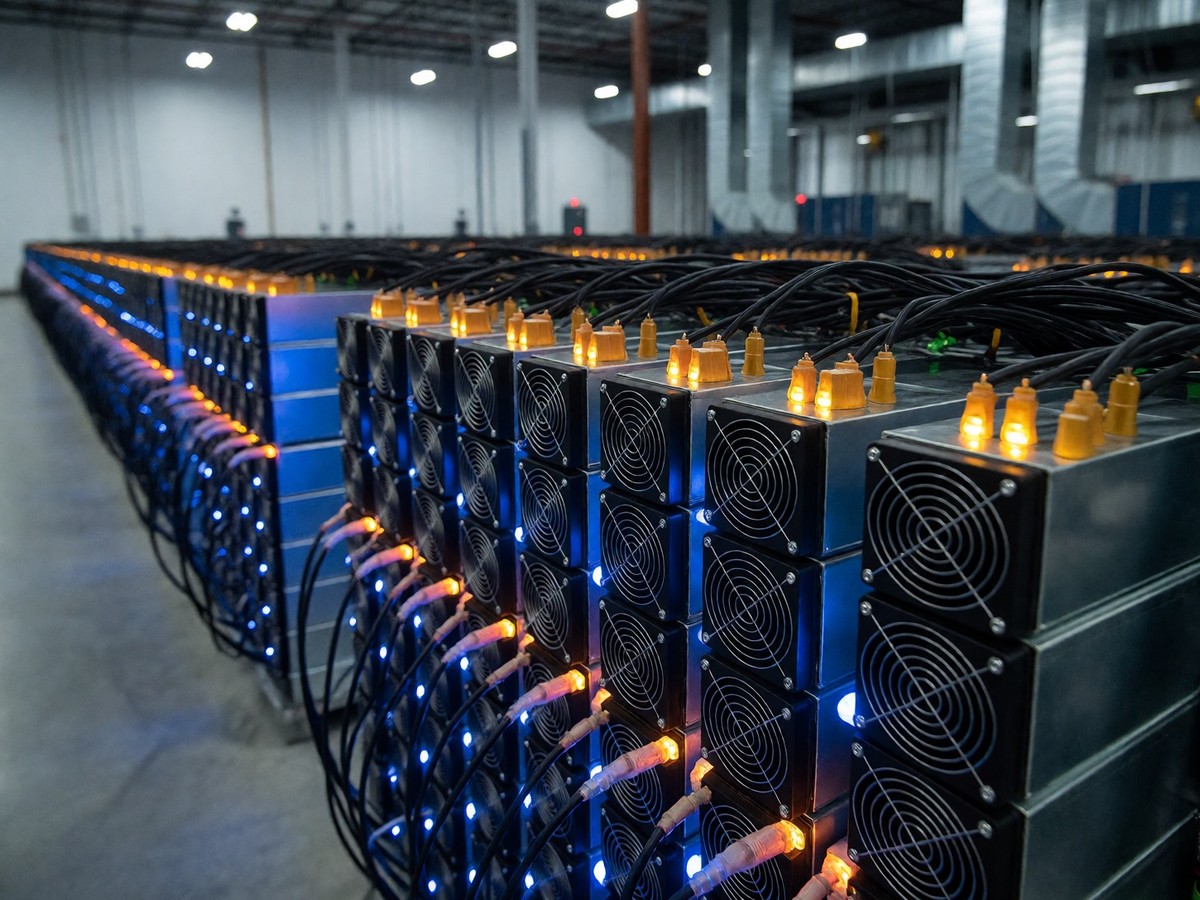
Bitcoin difficulty stands at 125.81 trillion as of September 1, 2026. This value follows a period of volatility in the network’s computational requirements. In mid-June, the network experienced a significant 11 percent drop in difficulty. This adjustment moved the difficulty from 138.96 trillion to 123.88 trillion. The current environment favors large, efficient operators who can withstand price volatility.
The mechanism of difficulty
The difficulty is a measure of how hard it is to mine a block. The current difficulty number shows the number of hashes required to mine a single block. A Bitcoin hash is deterministic with a pseudorandom result. This means that everyone can calculate the target on their own. Hashing to a target difficulty is stochastic.
The protocol adjusts difficulty every 2,016 blocks. This interval averages to a two-week period. The network measures the time taken to find the last 2,016 blocks and compares it to the expected time of 20,160 minutes. This calculation uses the ratio of the actual time to the expected time. If miners find blocks faster than 10 minutes on average, the difficulty increases and the target decreases. If blocks arrive slower, the difficulty decreases and the target increases.
The difficulty formula uses the ratio of the Difficulty Target to the Current Target. The Difficulty Target is the highest possible target reachable with a block hash. The Current Target is the hexadecimal difficulty derived from the 256-bit number in a block header. A lower target makes it more difficult to find a valid hash. Miners attempt to find a hash value that stays below this target.
A longstanding bug in the Bitcoin source code affects these calculations. The time spent mining the first block in each difficulty epoch has no effect on the next difficulty calculation. Even if that first block took an entire year to mine, the difficulty would not drop.
Why the June 2026 difficulty drop occurred
The 11 percent difficulty drop in June 2026 happened because hashrate left the network. Several forces pulled miners offline during this period. Bitcoin price slid toward $67,000, which squeezed profit margins for many. The network-average cost to produce a coin sat near $87,000. These numbers forced higher-cost miners to power down.
Blocks arrived slowly.
As the rate of block discovery slowed, the protocol responded at the next adjustment. The adjustment for the June drop occurred around 03:11 UTC on June 14. This change happened about 790 blocks after the period began. This reduction in difficulty helps the network return to the 10-minute block time target.
The 2026 hashrate peaks show underlying strain within mining operations. When the price stays low and the cost to mine stays high, the pressure on individual operators increases. Smaller miners without cheap power sources cannot cover electricity costs when the hashprice falls. This leads to a reduction in total computational power.
Impact on miner profitability
The difficulty adjustment affects revenue and profit differently for those who stay online. If difficulty drops, the same hardware earns a larger share of the rewards. This happens because the target increases, making it easier to find a block.
You already know the mechanics of mining pools.
A 11 percent cut in difficulty increases revenue by about 12 percent for the same hardware at a constant price. Because the power bill does not change, net profit jumps by more. For an Antminer S23 Hydro using 8-cent power, daily revenue rose from $20.88 to $23.42 after the June adjustment. The net profit for that machine rose from $10.30 to $12.84.
| Machine Model | Power Cost per kWh | Pre-Drop Daily Revenue | Post-Drop Daily Revenue | Pre-Drop Net Profit | Post-Drop Net Profit |
|---|---|---|---|---|---|
| Antminer S23 Hydro | $0.08 | $20.88 | $23.42 | $10.30 | $12.84 |
A decrease in difficulty also lowers the cost to mine a full Bitcoin. An efficient operation that produced coins at $45,000 before the adjustment saw that cost fall to $40,000 after the adjustment.
Mining pool concentration and market share
The mining landscape shows significant concentration among a few large pools. This concentration affects how hashrate is distributed across the network. As of 2026, the following pools control the largest portions of the network.
| Mining Pool | Reported Hashrate | Market Share |
|---|---|---|
| Foundry USA | 233.4 EH/s | 25.44% |
| AntPool | 164.8 EH/s | 17.96% |
| F2Pool | 135.4 EH/s | 14.76% |
| SpiderPool | 89.1 EH/s | 9.71% |
| ViaBTC | 83.7 EH/s | 9.13% |
| MARA Pool | 50.8 EH/s | 5.53% |
Foundry USA holds a 25.44 percent share of the total hashrate. Its reported hashrate is 233.4 EH/s. Foundry USA is a subsidiary of Digital Currency Group. DCG maintains a portfolio including Grayscale Investments, Genesis Trading, and CoinDesk. This backing provides the capital needed to buy ASIC hardware at scale.
The concentration in pools creates a centralization paradox. While Foundry USA holds a massive share, it stays below the 51 percent threshold. A 51 percent majority would allow an entity to compromise network trust.
Scaling operations at Marathon Digital
Marathon Digital Holdings continues to expand its mining footprint. The company increased its 2024 hash rate target to 50 EH/s. This target represents 100 percent growth compared to its original 2024 goals of 35-37 EH/s. Marathon started 2024 with 24.7 EH/s of energized hashrate.
The company uses state of the art equipment and proprietary technology. This strategy aims to improve fleet efficiency. Marathon seeks to approach 21 joules per terahash as it grows. The expansion is fully funded through the company’s current liquidity position.
The company is one of the largest publicly traded miners in North America. Large miners like Marathon prepare for halving events for years. The 2024 halving reduced the block subsidy from 6.25 BTC to 3.125 BTC. This reduction forces a focus on operational precision and fee income.
The hashrate and price divergence
Bitcoin hashrate reached all-time highs in 2026. However, the price does not always follow computational strength. This divergence creates tension between network security and market value. High hashrate indicates that miners are still committing resources to the network.
Mining difficulty grows as more miners join the network. This growth increases the security of the blockchain against attacks. However, rising difficulty also puts pressure on less capable participants. If the price of Bitcoin stays flat while hashrate climbs, the hashprice falls. Hashprice measures the revenue per unit of hashashrate.
When hashprice falls, fewer earnings appear for each mining device. Less efficient operators see their margins shrink. Debt-heavy miners may need to sell Bitcoin to meet expenses. This selling pressure can influence market behavior.
Market focus often shifts to liquidity and macroeconomic factors. Interest rates and bond yields can weigh on Bitcoin price. Even though the network foundation remains strong, prices shift due to investor behavior.
Will the hashrate recover before the next halving?
The impact of the halving on mining economics
The 2024 halving changed the reward structure for all miners. The block subsidy dropped significantly, which makes transaction fees more important. In the period following the halving, transaction fees can exceed the block subsidy. This happened after block 840, when fees reached $2.4 million.
One driver of fee activity is the Runes protocol. This protocol allows for the minting of fungible tokens. Speculative activity around these tokens increases the number of transaction fees available to miners. This fee income helps offset the lower block subsidy.
Survival in the post-halving era favors large firms with low electricity costs. These firms can withstand periods where the price of Bitcoin is lower than the cost of production. Smaller players often face the choice of shutting down or selling hardware.
Mining costs rose.
The industry continues to consolidate toward a few large public companies. These firms have the capital to swap old machines for newer, more efficient hardware. They also have the scale to negotiate better power agreements.
Difficulty stays high.
The difficulty level reflects the ongoing competition. As more efficient machines enter the network, the difficulty climbs. This keeps the block production schedule consistent, even as the total hashrate grows. The network maintains its issuance schedule regardless of how much computational power joins the fray.