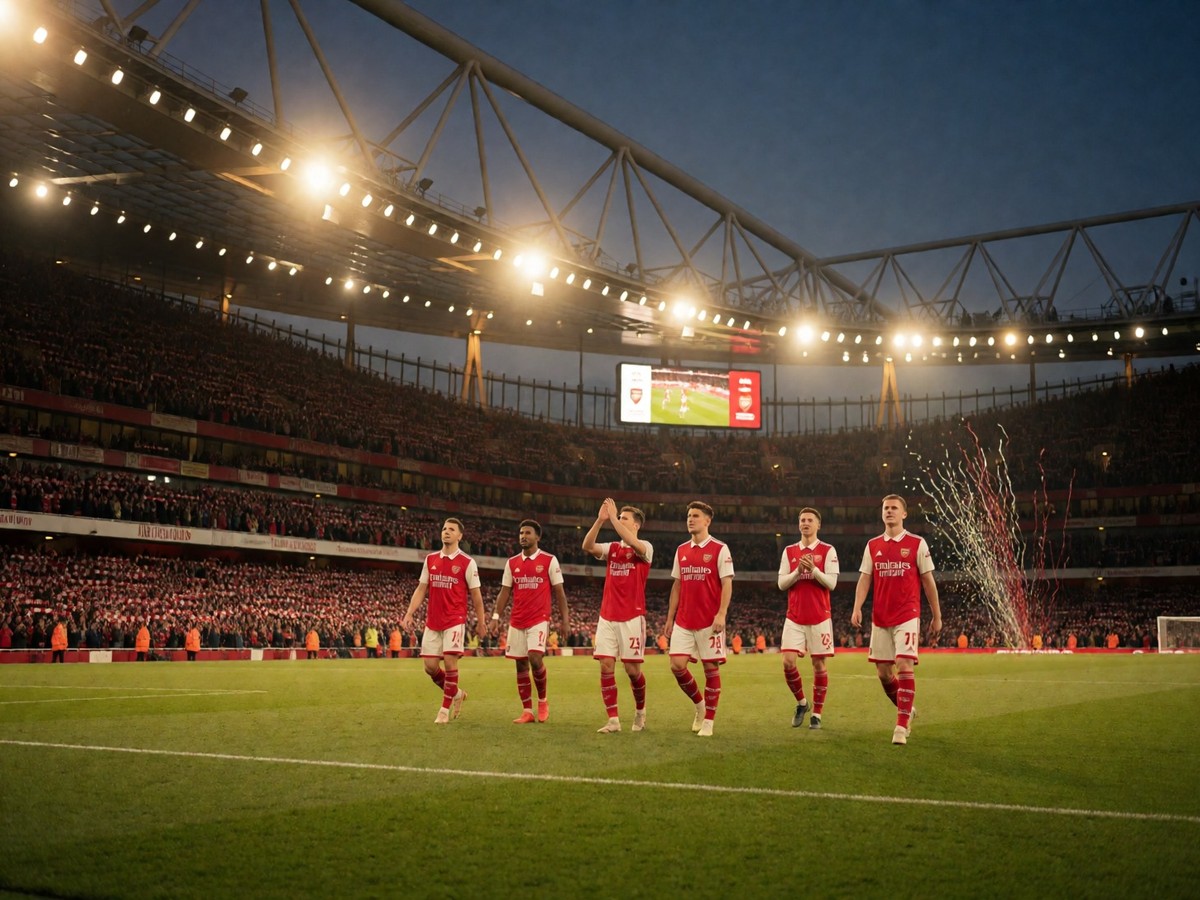
Arsenal won the 2025/26 Premier League with 85 points. This result ended a 22-year wait for the top flight. The club finished seven points ahead of Manchester City after the Gunners secured victory against Burnley with one game remaining. I believe the trend of defensive concentration at the Emirates decided the race. The team spent 238 days at the top. This is 204 more days than Liverpool. It is 229 more days than Manchester City.
The title belongs to North London.
The Emirates Fortress
The home record at the Emirates provided the foundation for this championship. Arsenal recorded the best home record in the division. They won 15 matches and drew 2. They lost only 2 games at home. The team averaged 2.47 points per game at the Emirates. This stability helped the squad overcome a period of instability in April.
The consistency of the home performances prevented a collapse. Arsenal won eight games by a score of 1-0. These narrow victories show a professional approach to winning. They did not need high scoring margins to control their results. Instead, they used their structure to stifle opponents. The team ran more distance than their opponents in 35 out of 37 league games. This work rate kept opponents from gaining momentum in North London.
The Emirates crowd witnessed a side that dominated spatial control. Arsenal’s xG per match reached 1.77. This output remained consistent even during the difficult month of November. The team averaged 1.3 goals per game during that period. They only lost once despite facing low-block opponents and injuries. The home form stayed strong because the defensive structure remained intact.
David Raya and the Clean Sheet Record
David Raya won the Golden Glove award for the 2025/26 season. He kept 19 clean sheets in 38 matches. This total tied the record for an Arsenal goalkeeper. He outperformed Manchester City’s Gianluigi Donnarumma, who kept 15 clean sheets. Arsenal conceded only 27 goals in the league. This is eight fewer than the 35 goals conceded by Manchester City.
David Raya was incredible.
The goalkeeper provided the stability necessary to turn narrow advantages into points. He kept 19 clean sheets, which was six more than any other team in England, Spain, Italy, Germany, or France. In ten of their seventeen league games, Arsenal allowed chances worth less than 0.5 xG. This level of suppression is rare. The goalkeeper’s ability to claim balls and distribute effectively allowed the team to maintain control.
The defensive returns were decisive. Arsenal conceded 27 goals in 38 games, which is one of the lowest totals in the modern era. Only Manchester City and Liverpool have conceded fewer goals in recent Premier League seasons. This defensive efficiency is the primary reason the title returned to North London.
The Saliba and Gabriel Partnership
William Saliba and Gabriel Magalhaes formed a defensive wall. They started 26 league games together. They won 17 of those games. They kept 15 clean sheets as a pair. They kept a shutout every 1.7 games. This partnership made it difficult for any striker to find space.
The center-back pairing was effective. Arsenal’s defensive numbers were not just systemic but also delivered at the individual level. When Saliba and Gabriel played together, the team displayed a level of organization that was difficult to break. They conceded only 22 goals in 31 Premier League games. This stat shows how much the team relied on their presence.
The defensive block compressed the channels between the center-backs and the midfielders. This structure reduced the number of high-quality chances opponents could create inside the box. Opponents often had to take low-value shots from distance. If an opponent tried to counter-attack, they had to beat Gabriel physically first. If they managed that, Saliba covered the space with his pace.
Set-Piece Efficiency Under Nicolas Jover
Arsenal became set-piece masters this season. They scored 18 goals from corners. This broke the 33-year-old Premier League record. The previous record of 16 goals stood since the 1992/93 season. They scored 29 goals from set-pieces in total. This is four more goals than any other team in the division.
Nicolas Jover works on these routines. The majority of the goals came straight from corners. Arsenal’s tall players and smart routines made them difficult to stop. This tactic created a consistent problem for every defense in the league. The goals were spread across the squad. Most goals came from center-backs and midfielders who arrived late into the box.
The reliance on dead-ball situations provided a way to score when open play was difficult. Arsenal used set pieces to score in 20 different Premier League matches this year. This made them a threat whenever the ball stopped moving. It allowed them to win games where they lacked dominance in possession.
The Gyokeres Influence
Viktor Gyokeres cost £69 million. He scored 14 Premier League goals. He scored 21 goals in all competitions. He is the first player to score 20+ in all competitions in a debut Arsenal season since Alexis Sanchez. He creates space for Bukayo Saka and Martin Odegaard.
Gyokeres is a physical presence. He wrestles with center-backs and keeps them busy. This movement gives Saka and Odegaard breathing room. He averages fewer than two shots per game. This is below the league average for strikers. He does not miss sitters because he is not in those situations often enough.
He reads the space well. Against Everton, he opened a lane for himself to attack. This created opportunities for teammates. Arsenal are a better attacking team with him on the pitch. They create more chances with him in the lineup. The issue is his connection with teammates rather than his presence.
Midfield Control With Zubimendi and Rice
Martin Zubimendi cost £51 million. He allows Declan Rice to play more freely. Rice has an average match rating of 7.32. He played 4,336 minutes. The arrival of Zubimendi transformed the midfield pivot.
Zubimendi dictates the tempo. He puts his foot on the ball when games become chaotic. He takes care of the dirty work in front of the back four. This allows Rice to drive forward. Rice pops up in the penalty area and bullies midfielders. He is the engine room of the team.
Martin Odegaard ranks fourth in the league for shot-creating actions per 90 minutes. He is behind Bruno Fernandes, Jeremy Doku, and Rayan Cherki. He beats the first line of pressure and the second line. He recycles possession safely. He finds Saka frequently. He provides a tactical advantage when Arsenal lead.
Arsenal also signed Noni Madueke for £52 million. He provides depth on the wings. The squad depth helps Arsenal close out tight 1-0 victories. Players like Christian Norgaard and Cristhian Mosquera provide veteran experience.
Comparing the Defensive Totals
Arsenal’s defensive dominance was clear when compared to their rivals. They conceded 27 goals. Manchester City conceded 35. This eight-goal gap was where the seven-point title margin was built. Arsenal kept 19 clean sheets. Manchester City kept 16.
Manchester City were top scorers. They scored 77 goals. Arsenal scored 71. City’s title challenge failed because of inconsistency at the back. Arsenal’s defense was a brick wall.
Liverpool finished 11th. They conceded 53 goals. They lost 6 of their last 7 matches. Their collapse was comprehensive. They fell from title contenders in September to mid-table in January. They are not the same side they were last year.
Could this defensive blueprint remain effective in the 2026/27 season?
The gap between the top two and the rest of the league was wide. Arsenal finished on 85 points. Manchester City finished on 78. Aston Villa finished on 65. Liverpool finished on 60. The defensive reliability of the Gunners was the defining difference.
The title was built on preventing goals. Arsenal prioritized shot-quality suppression. They forced opponents into low-value attempts. This was more effective than purely focusing on shots per game. The defensive organization was the main driver of success.