Author: prpadmin

  • Belgian Grand Prix results and the McLaren championship battle

    Belgian Grand Prix results and the McLaren championship battle

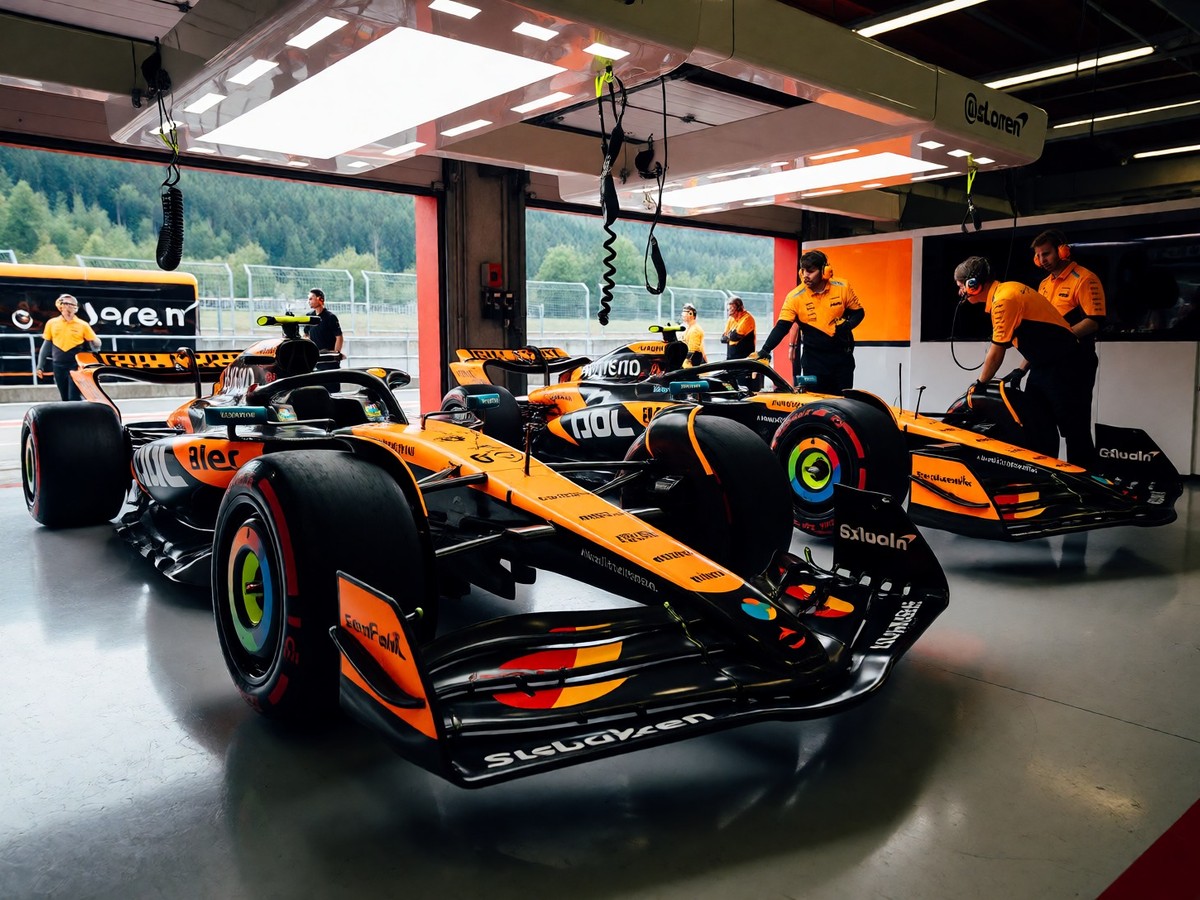
    Kimi Antonelli won the 2026 Belgian Grand Prix at Spa-Francorchamps. He secured his sixth victory of the season after a tight battle with Charles Leclerc. Max Verstappen finished in third place. The race lasted 44 laps. Antonelli took the lead from Verstappen at Les Combes and maintained it against Leclerc. Leclerc finished just 1.952 seconds behind the Mercedes driver.

    The race results placed Oscar Piastri in fifth position. He finished 18.988 seconds behind the winner. Lando Norris finished in seventh place. He recovered from a 13th place start to reach the points.
    Belgian Grand Prix results and the McLaren championship battle (2)

    The Belgian Grand Prix battle

    The race at Spa-Francorchamps provided significant drama. George Russell retired on the opening lap after contact with Lewis Hamilton. This incident caused a Safety Car. Hamilton later faced a five-second penalty for the same collision. He eventually recovered to finish fourth.

    While the majority of the grid opted for the medium compound, Lando Norris chose to start the Belgian Grand Prix on the hard tyres, joined by Sergio Perez, Lance Stroll, Isack Hadjar, Fernando Alonso, and Ollie Bearman.

    The field restarted on Lap 5. Hamilton attacked Piastri at La Source. Piastri regained the position shortly after. The battle continued at Les Combes where Leclerc and Piastri made contact. A piece of carbon fibre fell onto the circuit from the McLaren. Leclerc faced no repercussions for the contact.

    Piastri finished fifth.

    Lando Norris recovery from grid penalty

    Lando Norris started the race from 13th on the grid. He took this position because of a grid penalty for an engine change. He used the durability of his hard tyres to climb into the top ten. He overtook Lindblad on Lap 6 to move into sixth.

    You already know the intense pressure of a Belgian race weekend.

    Norris moved into fourth place by Lap 20. He faced a pit stop on Lap 30. He rejoined in eighth place after the stop. He then fought to overtake Gabriel Bortoleto. Norris finished seventh. He took six championship points for the result. He was 7 seconds behind his teammate Piastri at one point.

    Will the Mercedes momentum continue into the Italian Grand Prix at Monza?

    The constructors’ championship standings

    The 2026 constructors’ championship remains a fight between the top three teams. Mercedes leads the standings with 425 points. Ferrari holds second place with 338 points. McLaren sits in third place with 263 points. Red Bull follows in fourth with 186 points.

    Racing Bulls has 66 points. Alpine has 63 points. Haas has 21 points. Audi holds 16 points. Williams has 11 points. Aston Martin has 3 points. Cadillac has 0 points.

    The points gap between Mercedes and McLaren is 162 points. The gap between Ferrari and McLaren is 75 points.

    Technical divergence in the MCL40

    The McLaren MCL40 features the shortest permitted wheelbase allowed by the regulations. This design choice helped the team find weight savings. It reduced the total floor area available for adding strakes and slots to condition airflow.

    Oscar Piastri struggles on low-grip tracks. His driving style generates spikes in the surface temperature of the rear tyres when they slide. His linear movements on the brake and throttle increase rear-end slide. These slides force him to use more electrical power to regain speed. This reduces his state of charge.

    Lando Norris shows more adaptability. His style of overlapping the brake and throttle at a shallower trajectory helps the front wheels assist rear rotation. He maintains a better feel for lateral grip.

    Piastri finished fifth.

    The penalty point system and driver discipline

    The FIA uses a penalty point system to monitor driver behavior. Points remain on a driver’s Super License for exactly 12 months. A driver faces a one-race suspension after collecting 12 points.

    Oliver Bearman has 4 penalty points. His points expire on September 7, 2026. Alex Albon has 3 points. His points expire on September 21, 2026. Franco Colapinto has 3 points. His points expire on June 14, 2027. Lance Stroll has 3 points. His points expire on October 18, 2026.

    Kimi Antonelli has 2 points. His points expire on September 7, 2026. Oscar Piastri has 2 points. His points expire on November 9, 2026.

    Lando Norris has 0 penalty points. Max Verstappen has 0 penalty points.

    Leadership and culture at McLaren

    Andrea Stella leads the McLaren team. He took over as team principal in 2023. He previously worked with Michael Schumacher, Kimi Raikkonen, and Fernando Alonso. He transformed the team from low-midfield runners in early 2023 to constructors’ world champions in 2025.

    The drivers follow his culture of equanimity. Piastri said the team wants to protect the people around them. He noted that putting oneself second is easy to do for the sake of the team. Norris agreed with this sentiment.

    The team faces pressure as the season reaches its end. McLaren has not won a drivers’ title since 2008. Red Bull and Verstappen are experienced in high-pressure title battles.

    The championship remains open.

    The drivers’ championship race

    The drivers’ championship standings show a battle at the top. Kimi Antonelli leads the championship with 242 points. Lewis Hamilton is second with 183 points. George Russell is also tied with 183 points.

    Lando Norris is fourth with 159 points. Charles Leclerc is fifth with 155 points. Max Verstappen is sixth with 112 points. Oscar Piastri is seventh with 104 points.

    Piastri has nine grand prix wins this season. He has six pole positions and nine fastest laps. Norris has won at the Hungaroring and Zandvoort. He also won the Miami sprint.

    The points gap between Antonelli and Norris is 83 points.
  • The performance gap in the Aston Martin and Honda alliance

    The performance gap in the Aston Martin and Honda alliance

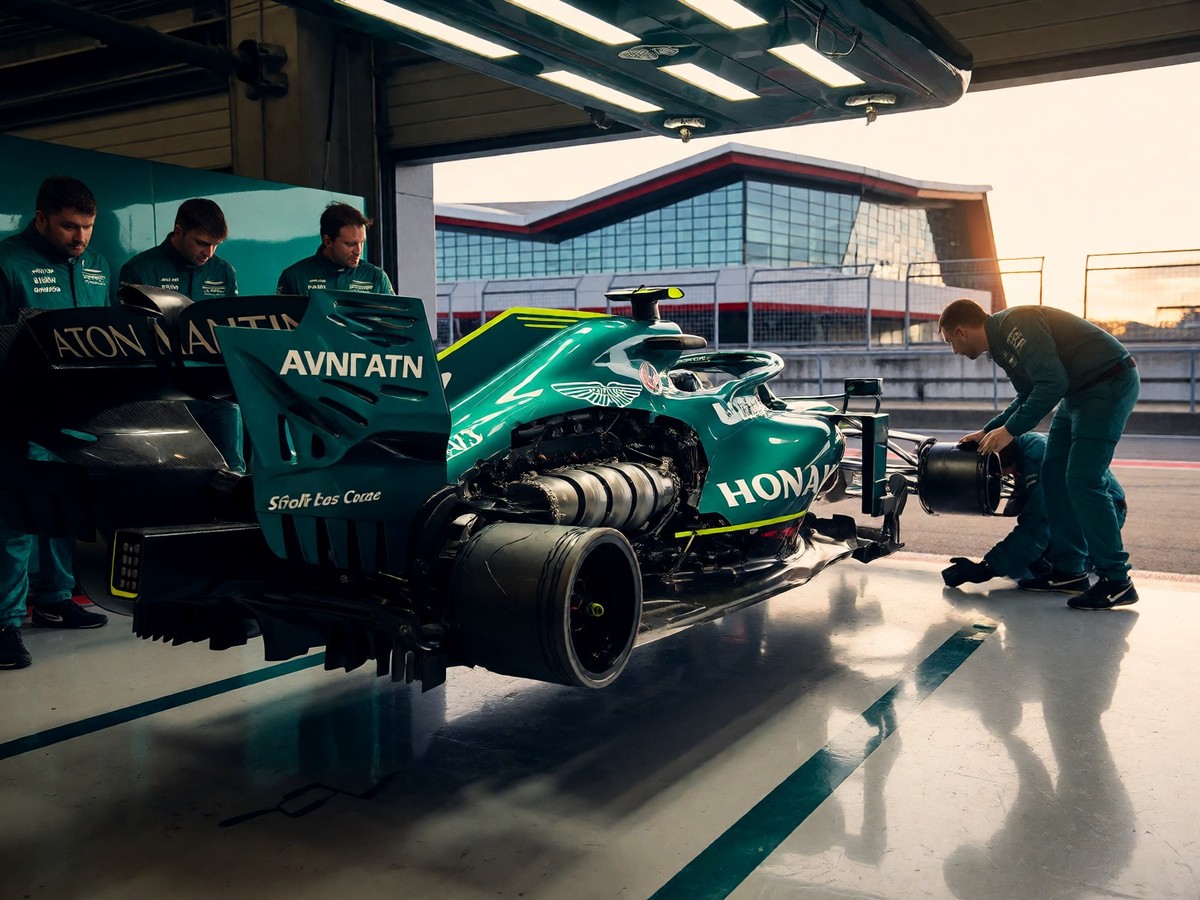
    The Honda power unit causes a 1.5 second per lap deficit for the Aston Martin AMR26. This performance gap prevents the team from using the aerodynamic advantages of the chassis designed by Adrian Newey. Severe vibrations from the engine cause physical issues for the drivers. Lance Stroll manages only 15 laps before the vibrations become problematic. Fernando Alonso can complete roughly 25 laps before experiencing similar issues. These vibrations also cause rapid battery wear and broken components. The team spends track time fixing reliability issues instead of improving speed.

    The AMR26 remains unreliable.

    The performance gap in the Aston Martin and Honda alliance (2)

    The technical leadership at Silverstone

    Lawrence Stroll invests heavily in the team infrastructure. He built the AMR Technology Centre and a new wind tunnel at Silverstone. Andy Cowell became the Chief Executive Officer on 1 October 2025. Enrico Cardile serves as the Chief Technical Officer. Adrian Newey works as the Managing Technical Partner. He earns a salary that reaches £30m with bonuses. Newey began his role on March 1 2025. He has 13 drivers’ championships and 12 constructors’ titles. Newey worked with the teams at Williams, McLaren, and Red Bull. He helped win championships in 1992, 1993, 1994, 1996, 1997, 1998, 1999, 2010, 2011, 2012, 2013, 2021, 2022, and 2023. His arrival in 2025 followed a negotiation with Red Bull to leave his role as chief technical officer. Dan Fallows serves as the technical director. He worked under Newey at Red Bull from 2006 until 2021.

    Technical specifications for the 2026 season

    The 2026 regulations mandate a 50/50 split between electrical power and the internal combustion engine. The removal of the MGU-H forces engineers to manage energy through the MGU-K. Teams must use 100% sustainable fuel.

    Feature 2026 Regulation Detail
    Power Split 50% Electrical / 50% ICE
    Fuel Type 100% sustainable fuel
    MGU-H Status Removed from regulations
    2026 Cost Cap $215 million
    Newey Salary £20m to £30m
    Alonso Contract Until the end of 2026

    The complex transition to these rules creates difficulty for manufacturers. Honda is working on an engine upgrade for Zandvoort to improve the internal combustion engine.

    Physical limits for Alonso and Stroll

    Fernando Alonso is 45 years old. He has not won a race since 2013. His contract with Aston Martin lasts until the end of 2026. Lance Stroll faces pressure to provide feedback on a fragile car. Stroll finished third at the Azerbaijan Grand Prix as a rookie. He was the youngest driver to finish on a podium at age 18. Stroll drove for Williams in 2017 and Racing Point from 2019 to 2020. He scored his first points in Montreal and had a podium in Italy. You know the physical toll of a heavy car. Stroll also had collisions with Sebastian Vettel and Carlos Sainz Jr. in his earlier career.

    Honda engineering and historical context

    Shintaro Orihara, Honda’s trackside general manager and chief engineer, said the team realized the scale of performance and reliability problems in January. The team found performance was inconsistent. The removal of the MGU-H makes maintaining boost pressure difficult. Honda re-entered the sport in 2026. They previously supplied McLaren from 2015 to 2021. They also supplied Toro Rosso in 2018. Red Bull used Honda as a works partner from 2019. Honda left F1 at the end of 2021. The company noted its interests as a car manufacturer were better represented elsewhere.

    Honda struggles.

    The engine vibrations remain a problem. The team is trying to fix the issue through the chassis. Honda has a deep history with hybrid technology. They want to use F1 to test sustainable energy systems for everyday vehicles.

    Financial compliance and Stroll’s investment

    Lawrence Stroll spends more than his original budget. He spent money on engineers and facilities. The F1 cost cap for 2026 is $215m. Aston Martin had a procedural breach in 2024. This breach involved an administrative delay regarding an auditor signature. The FIA confirmed the team stayed within the $135m limit for 2024. The FIA maintains flexibility to judge breaches individually, rather than using a one-size-fits-all approach when they evaluate if a team exceeded the spending limits set for the season. Driver salaries and the pay for the three highest-earning staff members are not part of the cap.

    Manufacturing changes at Silverstone

    Aston Martin is building its own gearbox. They no longer buy this component from Mercedes. This change follows the end of their exclusive engine and component supply deal. The team brings all parts for manufacture in-house at the Silverstone facility. This facility is now fully operational. The team works to integrate the Honda power unit with the chassis.

    The roadmap to recovery

    The team must stabilize the power unit to use the Newey chassis. Improving the internal combustion engine is the priority for the Zandvoort upgrade. The gap to the front-runners remains large. The team spent its development budget on reliability fixes. Will the Zandvoort upgrade fix the ICE deficit?

    The partnership is a long-term project.

  • Fenerbahce’s Istanbul rebuilding strategy challenges Real Madrid

    Fenerbahce’s Istanbul rebuilding strategy challenges Real Madrid

    Fenerbahce’s aggressive reconstruction of their roster directly challenges the hierarchy of European basketball. The Turkish club finalized their 2026-27 roster after a summer that included nine new arrivals and 11 departures. This massive turnover aims to capitalize on the club’s recent success, including a domestic Triple Crown in Turkiye and a EuroLeague Final Four appearance. Fenerbahce’s investment in new talent positions them to contest the EuroLeague title against heavyweights like Real Madrid.

    The financial turnaround in Istanbul

    Fenerbahce’s men’s basketball department finished the 2025-26 season with a 3.77 million euro profit. This result exceeded the initial expectations of a 5.72 million euro loss. The club generated 39.92 million euros in revenue during that campaign, which surpassed the originally projected 28.81 million euros. Expenses for the season reached 36.15 million euros, which is higher than the initial budget of 34.53 million euros. Fenerbahce turned a projected loss of 5.72 million euros into a 3.77 million euro profit after generating 39.92 million euros in revenue during the 2025-26 season, exceeding their original budget projection by 9.49 million euros.

    Fenerbahce's Istanbul rebuilding strategy challenges Real Madrid (2)

    Money matters.

    The club expects to keep its player salary budget near 17 million euros for the 2026-27 season. This spending level remains consistent with what the Turkish champions spent during the previous campaign. The massive revenue increase allowed the club to fund a roster overhaul despite the high costs of acquiring top-tier talent. You know the intensity of the Istanbul rivalry.

    The massive roster overhaul

    Fenerbahce reshaped almost the entire squad to maintain its competitiveness. The club added nine new players to the roster: Shane Larkin, Braxton Key, Shavon Shields, Will Clyburn, Trent Forrest, Ignas Sargiunas, Sertac Sanli, Marcus Bingham Jr., and Johnny Juzang. These signings follow the departure of 11 players from the previous year. The players who left include Arturs Zagars, Devon Hall, Khem Birch, Nando De Colo, Jilson Bango, Brandon Boston, Armando Bacot, Bonzie Colson, Metecan Birsen, Tarik Biberovic, and Mikael Jantunen.

    The departure of Tarik Biberovic caused significant disruption to the summer strategy. The Dallas Mavericks convinced the Turkish international to move to the NBA. This forced Fenerbahce to pursue both Will Clyburn and Johnny Juzang to fill the vacancy. Only six players from the 2025-26 squad remained, such as Wade Baldwin, Nicolo Melli, and captain Melih Mahmutoglu. The club retained Baldwin and Melli with new multi-year deals. Talen Horton-Tucker also chose to stay with the club despite having an NBA exit clause.

    The roster underwent massive changes this summer. Nine new players joined the squad. Eleven players left the club. This includes the departure of Tarik Biberovic to the Dallas Mavericks. The club aims for the EuroLeague title through this rebuilding process.

    Real Madrid’s talent management

    Real Madrid focuses on different strategies to maintain its standing. The Spanish club signed 18-year-old Turkish playmaker Arda Guler from Fenerbahce. The reported fee for Guler is approximately 20 million euros. Guler, who was called the Turkish Messi, will join Jude Bellingham, Vinicius Jr, Rodrygo, Aurelien Tchouameni, and Eduardo Camavinga. Last season, Guler scored four goals and provided four assists.

    Madrid faces internal pressure regarding its roster usage. Former Arsenal defender Matthew Upson stated that the team is not at the level supporters expect. The club lost its European crown following an exit to Arsenal and faces a fight to defend its La Liga title. Pundits have noted that second tier talent, such as Arda Guler and Brahim Diaz, have received limited playing time. The core group of players now appears physically and mentally exhausted.

    Madrid seeks stability.

    Carlo Ancelotti, who is 65, has a contract that expires in 2026. The club hierarchy has discussed his future, and Xabi Alonso is linked to a return to the team. Ancelotti has won 20 major trophies, including five Champions Leagues. He told reporters he could discuss his future when his contract expires.

    The Istanbul showdown

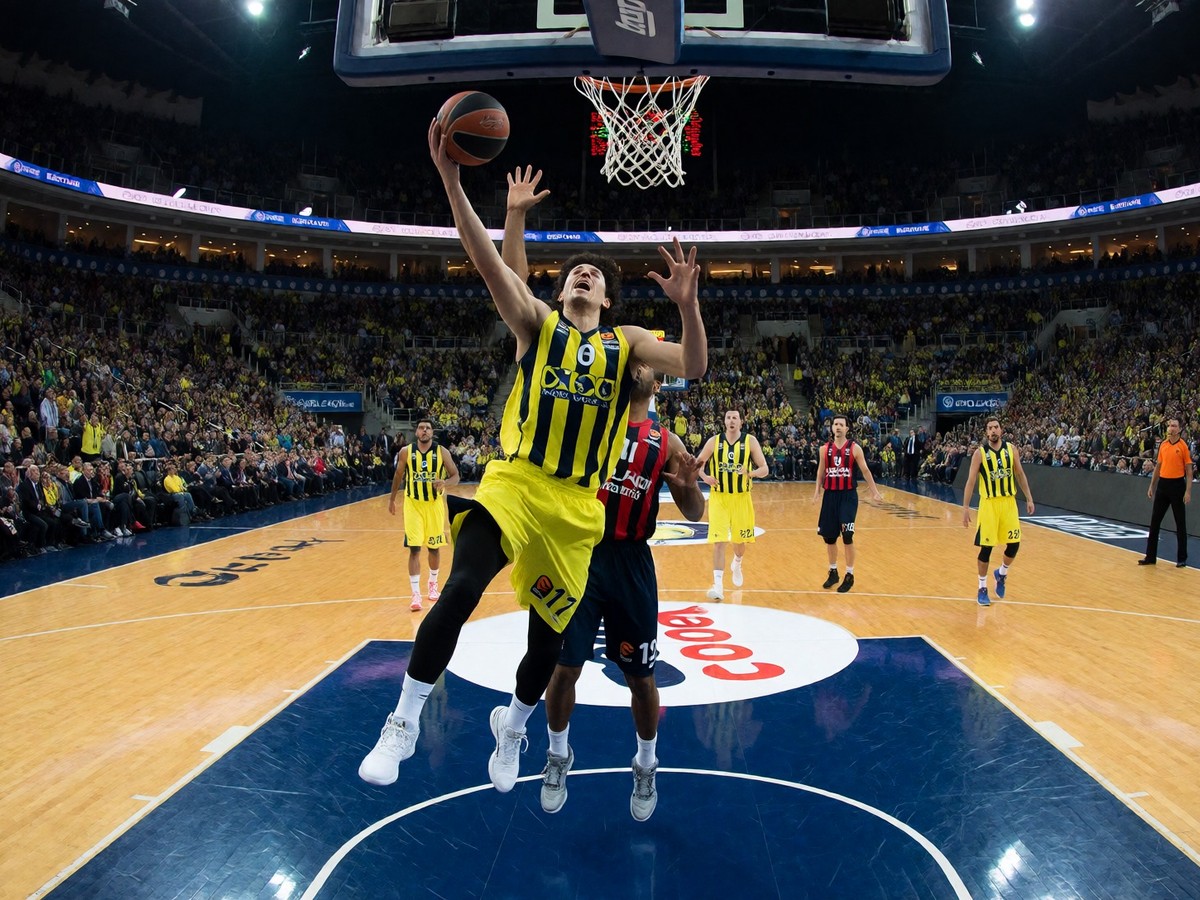
    Fenerbahce and Real Madrid met in Istanbul in a contest that showed the gap between the two programs. Real Madrid won the match with a final score of 74-69. Fenerbahce took an early lead in the second quarter, leading 29-21 after 13 minutes. Boston Jr. contributed to this aggressive push by the Turkish side.

    Madrid responded quickly. The Spanish side regained defensive intensity and controlled the rebounds to pull ahead. Edy Tavares dominated the paint, scoring 10 points in the first half. Campazzo also contributed two three-pointers to help Madrid take a 40-34 lead into halftime.

    The game became more physical after the halftime break. Fenerbahce used a 12-3 run led by Boston Jr. to take a 58-54 lead by the end of the third quarter. Lyles took over the offensive duties for Madrid later in the game. He scored 8 consecutive points to tie the game. He then scored 5 points during a 10-1 run to secure the victory.

    They won.

    The NBA expansion threat

    The EuroLeague faces external pressure from the NBA’s plans for a European presence. The NBA is targeting October 2027 to launch a new 16-team league. This model includes 12 permanent franchises and four teams that qualify through merit. NBA Europe managing director George Aivazoglou listed target cities including Athens, Istanbul, Paris, Lyon, Munich, Berlin, Rome, Milan, Madrid, Barcelona, London, and Manchester.

    Fenerbahce, Real Madrid, and ASVEL are three EuroLeague shareholder clubs that have not renewed their 10-year licenses. This situation creates tension within the existing league structure. EuroLeague CEO Paulius Motiejunas expressed confidence that all 13 shareholder clubs will remain. He dismissed the NBA plans as a broken record, noting that the NBA has been announcing plans for a year without concrete movement.

    The NBA plans to involve cities like London and Manchester. Adam Silver, the NBA Commissioner, described talks with Spanish clubs as being in the category of fact finding. He noted that any new investment will require patience. The NBA aims to capitalize on the fact that basketball is the second largest sport in Europe after soccer.

    Will the NBA project ever move past the announcement phase?

    EuroLeague’s fight for stability

    EuroLeague CEO Paulius Motiejunas says the organization knows how Europe functions. The league consists of 20 teams, including 13 shareholder clubs that cannot be relegated. Some clubs qualify through domestic leagues or through invitation. The NBA and Fiba are working together on the new 16-team model.

    The financial landscape in European basketball is difficult. Many clubs struggle with debt and rely on wealthy owners. EuroLeague has implemented spending restrictions to promote financial sustainability. The league also recently took its Final Four championship to Abu Dhabi to increase revenue.

    Madrid and Fenerbahce remain central to these discussions. Real Madrid favors the NBA project, according to Diario AS. The EuroLeague sent a letter to the NBA warning of legal action if talks with EuroLeague shareholders continue.

    Roster and Financial Comparison

    Category Fenerbahce Beko Istanbul Real Madrid
    2026-27 New Arrivals 9 Not specified
    2026-27 Departures 11 7 (including Lyles, Hezonja)
    Player Salary Budget ~€17 million Not specified
    2025-26 Basketball Profit €3.77 million Not specified
    2025-26 Basketball Revenue €39.92 million Not specified
    2025-26 Basketball Expenses €36.15 million Not specified
    Key Recent Signing Shane Larkin Arda Guler

    Fenerbahce’s financial health allows for the kind of aggressive rebuilding seen this summer. The club turned an expected loss into a significant profit, providing the liquidity needed to sign players like Will Clyburn and Johnny Juzang. Real Madrid focuses on integrating young players like Arda Guler, who arrived from Fenerbahce for a fee near 20 million euros.

    The mismatch in roster continuity is visible. Fenerbahce replaced most of its roster to chase a title. Real Madrid relies on a core group that faces physical exhaustion and managerial uncertainty.

    The impact of the Istanbul signings

    The mass movement of players in Istanbul changes the power balance in the EuroLeague. Fenerbahce’s decision to sign nine new players, including Shane Larkin and Shavon Shields, shows a direct attempt to overtake the established order. The club’s ability to turn a projected 5.72 million euro loss into a 3.77 million euro profit provides the foundation for this spending.

    Real Madrid’s reliance on a core group of players, while they manage the transition of talent like Arda Guler, creates a vulnerability. The heavy workload on their main players makes them susceptible to teams with fresh, high-level talent. Fenerbahce’s signings, such as Trent Forrest and Will Clyburn, provide the depth needed to challenge Madrid in a long season.

    The competition for the EuroLeague title now depends on whether Fenerbahce’s heavy investment can overcome Real Madrid’s experienced core. The financial success of the Turkish club suggests they have the resources to sustain this push. The NBA’s interest in Istanbul and other European cities only adds pressure to the existing clubs to maintain their dominance.

  • Coinbase Q2 2026 revenue disparity versus Kraken derivatives gains

    Coinbase Q2 2026 revenue disparity versus Kraken derivatives gains

    Coinbase reported $1.22 billion in net revenue for the second quarter of 2026. This figure fell 14% below the first quarter results. The company also missed the $1.29 billion revenue forecast from Wall Street analysts. Transaction revenue reached $599 million, which stayed below the $636 million forecast. Coinbase reported a net loss of $359.5 million.

    Coinbase missed its target.

    Coinbase Q2 2026 revenue disparity versus Kraken derivatives gains (2)

    Revenue streams shifted away from Bitcoin. Non-Bitcoin spot trading revenue made up 88% of net revenue in Q2 2026. This compares to 45% in Q2 2020. Bitcoin-related transactions accounted for only 12% of total company revenue. Subscription and services revenue grew to $555 million. This revenue segment reached 48% of net revenue. Paid Coinbase One subscribers exceeded 1 million people. You likely already tracked the volatility of these assets.

    Bitcoin Revenue Decoupling

    The company successfully decoupled its revenue from Bitcoin trading fees. While Bitcoin price fluctuations previously dictated company success, the current model relies on a broader set of assets. Trading volume market share for Coinbase reached 10.3% in Q2 2026. This rose from 9.1% in Q1 2026 and marked the third straight quarter of market share gains. Although Coinbase saw its transaction revenue drop to $599 million during the second quarter, the company still managed to grow its crypto trading volume market share to an all-time high of 10.3%.

    Coinbase lost money.

    Base and AI Infrastructure

    Stablecoin volume on the Base chain increased 7x year-over-year. Coinbase holds $20 billion in USDC, which accounts for more than 30% of all USDC in circulation as of the end of the quarter. Agentic finance showed high usage of these assets. More than 90% of agentic stablecoin transaction volume occurred on Base. 99% of all onchain agentic commerce used USDC. 97% of onchain agentic transactions used the x402 protocol in Q2 2026.

    The company also improved engineering efficiency. Pull requests per engineer grew 2.2x year-over-year. Integration test coverage across core services grew 2.5x in the last 6 months. AI adoption helps drive these productivity gains.

    Prediction Market Expansion

    Prediction market contracts and revenue grew 106% quarter-over-quarter. This revenue exceeded $100 million in annualized terms. A new crypto binaries experience launched late in the quarter. This launch increased daily traders by 3x and increased daily revenue by 4x compared to the May daily average.

    Prediction market revenue jumped.

    Kraken’s Derivatives Strategy

    Kraken expanded its derivatives presence through the $1.5 billion acquisition of NinjaTrader in 2025. This move aimed to accelerate its U.S. crypto derivatives offerings. Kraken serves 15 million clients globally and holds $43 billion in customer assets as of mid-2025. The company targets a $15 billion valuation during its 2026 IPO. Kraken remains the second-largest U.S. exchange by volume.

    Kraken also maintains a strong presence in fiat-to-crypto liquidity. The exchange commands over 40% of global stablecoin-to-fiat trading volumes. Its fee structure for most users sits between 0.2% and 0.4% per trade. Kraken targets an IPO.

    The Competition for Derivatives

    The derivatives market grew as traders sought hedging. Binance captured 34.9% of derivatives volume in Q1 2026. This volume exceeded the combined totals of OKX and Bybit. OKX maintained the second spot in derivatives. Hyperliquid produced $492.7 billion in derivatives volume during Q1 2026. This placed the decentralized protocol in the top ten.

    The derivatives-to-spot ratio for the market stood at 9.6x in Q1 2026. This ratio remained steady throughout the first quarter. Traders used derivatives for hedging and short-term trading during market adjustment phases. In Q1 2026, total market-wide trading volume reached $20.57 trillion. This included $1.94 trillion in spot volume and $18.63 trillion in derivatives volume.

    Market Data and Comparison

    Entity Metric Value
    Coinbase Net Revenue (Q2 2026) $1.22 billion
    Coinbase Transaction Revenue (Q2 2026) $599 million
    Coinbase Crypto Trading Volume Market Share 10.3%
    Coinbase USDC Held in Products $20 billion
    Kraken 2024 Revenue $1.5 billion
    Kraken 2024 Adjusted EBITDA $424 million
    Kraken Customer Assets (Mid-2025) $43 billion
    Kraken Acquisition of NinjaTrader (2025) $1.5 billion

    Market trends show that the spot trading segment held 63.6% of the market in 2026. The Bitcoin segment held 47.3% of the market. Centralized exchanges held 88.4% of the market.

    Market Growth and the Future

    The regulatory environment changes for all exchanges. The CLARITY Act moved toward a Senate floor vote. Management at Coinbase expects regulatory clarity regardless of whether the CLARITY Act passes. SEC Chair Atkins and CFTC Chair Selig both stated they prepared to pass clear rules.

    The industry faces intense competition from new models. Robinhood expanded into crypto and launched its own Layer 2 blockchain. Multiple companies like Stripe and Robinhood launch their own blockchains. Coinbase plans to continue investing in Base to provide neutral infrastructure.

    Will Coinbase successfully pivot to AI agents before derivatives competition erodes its margins?

    Kraken maintains its focus on regulatory compliance. It holds licenses in Canada and was the first exchange licensed under the European MiCA framework in Ireland. Coinbase also implements best practices to meet regulatory requirements. Market volatility remains a risk for all participants.

  • Bet365 same-game parlay limits and Kambi pricing engine analysis

    Bet365 same-game parlay limits and Kambi pricing engine analysis

    Kambi’s AI-driven pricing engine handled 48% of all bets across its network in 2025. This percentage rose from 28% in 2024 and was just 4% in 2022. The technology uses machine learning to process market movements and manage exposure in real time. Kambi processes millions of bets daily, with trillions of potential combinations available, and its systems pinpoint the critical liabilities amidst the vast swathes of data that arrive through the global network. This concentration of liquidity helps the system train and refine its AI models through massive datasets. Kambi’s technology accounts for more than a third of operator GGR across its network.

    The correlation tax is real.

    Bet365 same-game parlay limits and Kambi pricing engine analysis (2)

    Bettors lose money.

    Bet365 allows users to create same-game parlays with a maximum of 12 legs. The maximum odds for these wagers reach +100000. Users find these options under the "Same Game Parlay" tab in the mobile app. Bet365 also provides a "Bet Builder +" option. This feature lets bettors combine multiple parlays and single wagers into one larger bet slip. You already know that adding too many legs increases the chance of losing. This feature allows users to combine popular markets from selected events into one slip.

    The correlation tax is a significant part of the cost for same-game parlays. A three-leg parlay priced at +400 might have an independent price of +595. This 195-point difference shows the edge the sportsbook keeps. Most bettors make the mistake of adding extra legs to chase a higher payout. This habit increases the number of outcomes that must succeed. More legs also compound the correlation tax. Every extra selection makes the win probability drop. A two-leg parlay might have a 25% chance of winning, but a six-leg parlay might have only 2%.

    Bettors often ignore line movement and late news. A QB passing yards prop that looked good on Wednesday might be a poor bet on Sunday if heavy rain falls. If a key player does not play, that leg is voided and the parlay is reduced. This reduction often results in worse odds than the user expected. Many bettors also build parlays without a clear game script. They stack random props that do not fit together. This creates an incoherent narrative that lowers the chance of winning.

    BetMGM reported net revenue of $696 million for the first quarter of 2026. This figure shows a 6% increase compared to the previous year. Online Sports net revenue rose by 4% in the same period. BetMGM manages its sports business through disciplined acquisition and player management. The company focuses on premium mass sports players to maintain healthy KPIs. BetMGM expects FY 2026 net revenue to be between $2.9 billion and $3.1 billion. Adjusted EBITDA for 2026 should fall between $300 million and $350 million.

    BetMGM manages risk through a refined player management strategy. The company aims for profitable and sustainable growth. It focuses on multi-product states and the Nevada market. BetMGM reported its first payment of $3 million in Parent Fees to Entain and MGM Resorts in Q1 2026. This payment is an operating expense for the provision of certain licenses and services.

    Bet365 operates in 13 US states as of May 2026. These states are New Jersey, Colorado, Ohio, Virginia, Kentucky, Iowa, Indiana, Louisiana, North Carolina, Arizona, Pennsylvania, Tennessee, and Missouri. DraftKings is available in 27 states. Bet365 has an average vig of 4.6% on its odds. DraftKings has a higher average vig of 5.3%.

    Metric Bet365 DraftKings
    US States 13 27
    Max SGP Legs 12 Not specified
    Max SGP Odds +100000 Not specified
    Average Vig 4.6% 5.3%
    PayPal Payout 12-48 hours 12-48 hours
    ACH Payout 2 days 4 hours 1-3 days

    Bet365 remains the best choice for live-betting and niche-sport bettors.

    Risk management prevents financial catastrophe. In 1996, Frankie Dettori won seven races at Ascot. This event cost bookmakers millions because they lacked real-time liability visibility. Most bets were placed in shops or over the phone. This meant no immediate overview of accumulating risk. Kambi manages risk through three pillars: liability management, stake acceptance, and player profiling. Liability management helps detect accruing liabilities early. Player profiling uses machine learning to predict behavior within the network. This profiling looks at past performance and future play. High-performance sportsbooks use these tools to stay ahead of threats.

    The odds vary.

    Kambi uses machine learning to identify unusual betting patterns. It also uses real-time data to inform decisions on stake acceptance. During bet placement, the player profile directly impacts the stake Kambi accepts. Preventative actions, like limiting high-risk bets or adjusting market limits, help operators stay ahead of threats. Post-bet placement, the system makes an updated player profile assessment. This allows for continuous adaptation of risk strategy.

    Bet365 provides an Early Payout feature for moneyline bets. This is a permanent feature. It requires no opt-in or promo code. If a team reaches a specific lead, the bet settles as a win. The NFL threshold is 17 points. The NBA threshold is 20 points. The NHL threshold is 3 goals. The MLB threshold is 5 runs. The NCAAF threshold is 17 points. The NCAAB threshold is 18 points.

    This feature adds expected value to moneyline bets. It reduces variance by cutting off downside risk. If the team you back leads by the required amount, the bet has already cashed. This is even more helpful for underdog bettors. When an underdog takes a large lead, the feature pays the bet even if the team loses later. The expected value for NBA moneyline bets is between 1% and 3%. The value for NHL moneyline bets is between 1% and 2%.

    Will Kambi’s AI eventually replace all human traders in the US market?

    Bet365 handles payouts through several channels. ACH withdrawals via Trustly settle at a median of 2 days 4 hours. PayPal settles at a median of 7 hours 21 minutes. DraftKings offers faster withdrawal times for some methods. DraftKings withdrawals via eChecks, Play+, or bank transfers typically take 1 to 3 business days. Regular checks take 3 to 7 days. PayPal takes 12 to 48 hours.

    Bet365 provides a wide selection of sports markets. It is the largest sports betting operator in the world. The company launched in 2000 in Stoke-On-Trent, England. It pioneered live betting, which increased its business significantly. Bet365 is available in 15 US states. It is a top choice for bettors who want many odds boosts. Bet365 has more odds boosts than any other US sportsbook.

    DraftKings is the number one sportsbook in the country. It began as a fantasy sports site in 2012. It is the favorite for fans who bet on the go. The DraftKings app has a simple and sleek design. The layout is modern. The banners have high resolution. The app receives high ratings on the App Store and Play Store.

    Bettors often make the mistake of chasing losses with bigger, riskier same-game parlays. After losing several tickets, some bettors try to recover money with larger, long-shot bets. This is dangerous because parlays have high variance and high vig. This behavior violates bankroll discipline. It can lead to a fast path to going broke. Bettors should stick to their unit size. A $10 bet should stay a $10 bet.

    The correlation tax is a massive edge for the house. A bettor who does not use a calculator to check the vig is leaving money on the table. Many bettors also bet on every game on a slate. This turns parlays into a habitual, high-volume bet instead of a selective tool. This increases total risk and makes it harder to stay within bankroll limits. It is better to pick two or three good spots per week.

    Bet365 provides many ways to use its products. The app includes live streaming for 70,000 events annually. This includes most ATP/WTA tennis and selected NHL games. The app also includes the Bet Boost feature. This feature allows for higher prices on single-event multi-leg tickets. The Early Payout feature is the most unique advantage Bet365 holds over its competitors. Most other books only offer similar features during specific events or playoffs.

    Bet365 mobile app performance is strong on both iOS and Android. The app includes an easy-to-find ‘Live In Game’ button. This button allows users to toggle all live betting options. Bet365 also provides each-way betting. This allows users to combine outright win bets with place bets. This is useful for golf and racing.

    Users must gamble responsibly. If you have a gambling problem, call 1-800-GAMBLER. Support is available 24/7.

  • Liverpool holds the advantage in the Premier League title race

    Liverpool holds the advantage in the Premier League title race

    Liverpool holds the advantage in the Premier League title race.

    Manchester City faces a goalkeeping transformation

    Pep Guardiola has four first-team keepers on the books. Gianluigi Donnarumma, Stefan Ortega, James Trafford, and Marcus Bettinelli all occupy the squad. The transfer of Ederson to Fenerbahce created confusion earlier this summer. Ederson was the number one before the opening Premier League game against Wolves, but he left the club 18 days later. Donnarumma arrived from Paris St-Germain on deadline day after Luis Enrique released him. Ortega remains at the Etihad after turning down options to leave. James Trafford joined the club after City used matching rights on a £27m bid from Newcastle for Burnley’s James Trafford. This move left Trafford in a position where he plays second fiddle to Donnarumma. Marcus Bettinelli joined to cover the departure of Carson.

    Liverpool holds the advantage in the Premier League title race (2)

    Nedum Onuoha noted that people did not understand the value of Ederson because his shot-stopping is great and his ability to be the spare player helps create something. If the new keepers make errors when pressed, it will change how City play. Donnarumma brings experience as a keeper who proved himself at Villa Park and Anfield in the Champions League last season.

    Defensive instability and consecutive losses

    Manchester City is struggling with a losing streak. The team suffered four consecutive defeats. They lost 2-1 to Brighton, followed by losses to Bournemouth in the Premier League, Tottenham in the Carabao Cup, and Sporting in the Champions League. Pep Guardiola said the side is not reaching its usual high standard.

    The squad is dealing with injuries to Ruben Dias, John Stones, Kevin de Bruyne, and Jack Grealish. Rodri and Oscar Bobb are also absent. Because John Stones left the Wednesday Champions League game with an apparent knee injury, he will be out for the foreseeable future, and this leaves a hole in the Manchester City defensive line. Ruben Dias has dealt with abductor issues. Nathan Ake returned to the squad after spending most of the winter on the sidelines.

    City has managed six clean sheets this season. Liverpool has 10 clean sheets.

    Liverpool injury status and availability

    Liverpool faces a significant number of absences. The squad management of these players will determine if they maintain their lead.

    Player Injury Type Expected Return
    Conor Bradley Knee (surgery) Next season
    Hugo Ekitike Achilles tendon End of season
    Giovanni Leoni ACL tear August 2026
    Federico Chiesa Muscle Not specified
    Joe Gomez Muscle Not specified
    Wataru Endo Ankle ligament October 19
    Alexander Isak Ankle Not specified
    Stefan Bajcetic Hamstring 2025/26
    Jeremie Frimpong Hamstring Not specified

    Conor Bradley is out after undergoing surgery for a knee injury sustained at Arsenal in January. Hugo Ekitike ruptured his Achilles tendon in April and will miss the 2026 World Cup. Giovanni Leoni is recovering from an ACL tear sustained during his debut against Southampton. Federico Chiesa feels a muscle injury after a game against Como. Joe Gomez is sidelined with a muscle injury and may be out for a month. Wataru Endo requires surgery for ankle ligament damage. Alexander Isak is out with an ankle injury. Stefan Bajcetic is recovering from hamstring surgery performed in the summer. Jeremie Frimpong is also sidelined with a hamstring injury.

    Haaland’s efficiency and fitness concerns

    Erling Haaland remains a force.

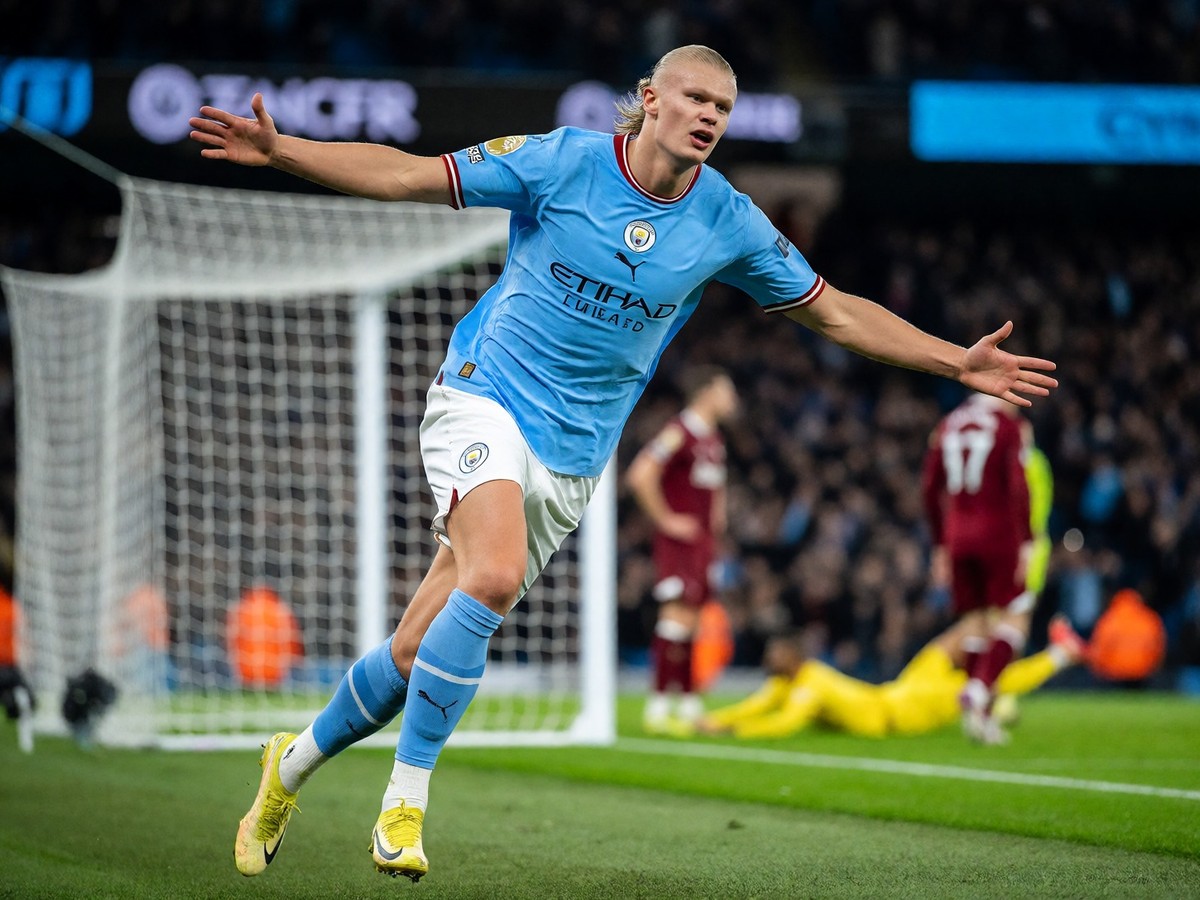
    Haaland scored four goals during the international break, including a double against Estonia and two goals against Italy. He has 32 goals for club and country from 20 appearances this season. In the Premier League, he has 22 goals and seven assists. His expected goals tally is 18.39. His goals-per-game ratio is 0.90. He has two assists. He picked up a knee injury against Newcastle. Pep Guardiola said the injury was nothing serious, but Haaland missed the midweek game against Madrid. Will Haaland’s scoring rate stay this high without consistent minutes?

    Salah’s attacking output

    Mohamed Salah leads the Golden Boot race with 23 goals. He has 13 assists this season. His expected goals tally is 19.38. His goals-per-game ratio is 0.92. He needs one goal to tie the Egyptian record of 69 international goals. He started for Egypt in their World Cup match against Australia. He previously substituted in a match against Iran. Salah is a playmaker as well as a scorer.

    Midfield and tactical differences

    The tactical setups for this matchup involve different formations. Liverpool uses a 4-2-3-1. This setup uses a double-pivot to shield the defense. The defense has conceded 32 goals this season. Manchester City uses a 4-3-3 or 4-5-1. City often uses a full-back in midfield to allow Phil Foden or Rayan Cherkito to move higher.

    The midfield battle involves Rodri and Wirtz. Rodri is returning to full fitness. Wirtz has four goals and three assists in his last 10 Premier League starts. You know how much weight this fixture carries. Wirtz is more agile than Rodri. Arne Slot may use Wirtz to force Rodri to expend energy.

    Semenyo has 12 league goals. This is the second highest tally on the team after Haaland. He will match up against Dominik Szobozslai. Szobozslai has played as a right full-back seven times. In four of those seven games, the opposition scored one goal or less.

    Head to head history

    Liverpool leads the all-time series with 110 wins. Manchester City and Liverpool have met 228 times since 1893. Manchester City has no wins in their last four Premier League meetings against Liverpool. Those matches resulted in two losses and two draws. Liverpool has 61 points. Manchester City is chasing Arsenal, who are six points ahead of them.

    Alexander Isak scored three Premier League goals for Newcastle against Liverpool before he moved to Merseyside for the 2025/26 campaign. Darwin Nunez, Luis Diaz, and Omar Marmoush provide other options for Liverpool.

  • Bitcoin’s 2026 difficulty adjustment explained

    Bitcoin’s 2026 difficulty adjustment explained

    Bitcoin difficulty stands at 125.81 trillion as of September 1, 2026. This value follows a period of volatility in the network’s computational requirements. In mid-June, the network experienced a significant 11 percent drop in difficulty. This adjustment moved the difficulty from 138.96 trillion to 123.88 trillion. The current environment favors large, efficient operators who can withstand price volatility.

    The mechanism of difficulty

    The difficulty is a measure of how hard it is to mine a block. The current difficulty number shows the number of hashes required to mine a single block. A Bitcoin hash is deterministic with a pseudorandom result. This means that everyone can calculate the target on their own. Hashing to a target difficulty is stochastic.

    Bitcoin's 2026 difficulty adjustment explained (2)

    The protocol adjusts difficulty every 2,016 blocks. This interval averages to a two-week period. The network measures the time taken to find the last 2,016 blocks and compares it to the expected time of 20,160 minutes. This calculation uses the ratio of the actual time to the expected time. If miners find blocks faster than 10 minutes on average, the difficulty increases and the target decreases. If blocks arrive slower, the difficulty decreases and the target increases.

    The difficulty formula uses the ratio of the Difficulty Target to the Current Target. The Difficulty Target is the highest possible target reachable with a block hash. The Current Target is the hexadecimal difficulty derived from the 256-bit number in a block header. A lower target makes it more difficult to find a valid hash. Miners attempt to find a hash value that stays below this target.

    A longstanding bug in the Bitcoin source code affects these calculations. The time spent mining the first block in each difficulty epoch has no effect on the next difficulty calculation. Even if that first block took an entire year to mine, the difficulty would not drop.

    Why the June 2026 difficulty drop occurred

    The 11 percent difficulty drop in June 2026 happened because hashrate left the network. Several forces pulled miners offline during this period. Bitcoin price slid toward $67,000, which squeezed profit margins for many. The network-average cost to produce a coin sat near $87,000. These numbers forced higher-cost miners to power down.

    Blocks arrived slowly.

    As the rate of block discovery slowed, the protocol responded at the next adjustment. The adjustment for the June drop occurred around 03:11 UTC on June 14. This change happened about 790 blocks after the period began. This reduction in difficulty helps the network return to the 10-minute block time target.

    The 2026 hashrate peaks show underlying strain within mining operations. When the price stays low and the cost to mine stays high, the pressure on individual operators increases. Smaller miners without cheap power sources cannot cover electricity costs when the hashprice falls. This leads to a reduction in total computational power.

    Impact on miner profitability

    The difficulty adjustment affects revenue and profit differently for those who stay online. If difficulty drops, the same hardware earns a larger share of the rewards. This happens because the target increases, making it easier to find a block.

    You already know the mechanics of mining pools.

    A 11 percent cut in difficulty increases revenue by about 12 percent for the same hardware at a constant price. Because the power bill does not change, net profit jumps by more. For an Antminer S23 Hydro using 8-cent power, daily revenue rose from $20.88 to $23.42 after the June adjustment. The net profit for that machine rose from $10.30 to $12.84.

    Machine Model Power Cost per kWh Pre-Drop Daily Revenue Post-Drop Daily Revenue Pre-Drop Net Profit Post-Drop Net Profit
    Antminer S23 Hydro $0.08 $20.88 $23.42 $10.30 $12.84

    A decrease in difficulty also lowers the cost to mine a full Bitcoin. An efficient operation that produced coins at $45,000 before the adjustment saw that cost fall to $40,000 after the adjustment.

    Mining pool concentration and market share

    The mining landscape shows significant concentration among a few large pools. This concentration affects how hashrate is distributed across the network. As of 2026, the following pools control the largest portions of the network.

    Mining Pool Reported Hashrate Market Share
    Foundry USA 233.4 EH/s 25.44%
    AntPool 164.8 EH/s 17.96%
    F2Pool 135.4 EH/s 14.76%
    SpiderPool 89.1 EH/s 9.71%
    ViaBTC 83.7 EH/s 9.13%
    MARA Pool 50.8 EH/s 5.53%

    Foundry USA holds a 25.44 percent share of the total hashrate. Its reported hashrate is 233.4 EH/s. Foundry USA is a subsidiary of Digital Currency Group. DCG maintains a portfolio including Grayscale Investments, Genesis Trading, and CoinDesk. This backing provides the capital needed to buy ASIC hardware at scale.

    The concentration in pools creates a centralization paradox. While Foundry USA holds a massive share, it stays below the 51 percent threshold. A 51 percent majority would allow an entity to compromise network trust.

    Scaling operations at Marathon Digital

    Marathon Digital Holdings continues to expand its mining footprint. The company increased its 2024 hash rate target to 50 EH/s. This target represents 100 percent growth compared to its original 2024 goals of 35-37 EH/s. Marathon started 2024 with 24.7 EH/s of energized hashrate.

    The company uses state of the art equipment and proprietary technology. This strategy aims to improve fleet efficiency. Marathon seeks to approach 21 joules per terahash as it grows. The expansion is fully funded through the company’s current liquidity position.

    The company is one of the largest publicly traded miners in North America. Large miners like Marathon prepare for halving events for years. The 2024 halving reduced the block subsidy from 6.25 BTC to 3.125 BTC. This reduction forces a focus on operational precision and fee income.

    The hashrate and price divergence

    Bitcoin hashrate reached all-time highs in 2026. However, the price does not always follow computational strength. This divergence creates tension between network security and market value. High hashrate indicates that miners are still committing resources to the network.

    Mining difficulty grows as more miners join the network. This growth increases the security of the blockchain against attacks. However, rising difficulty also puts pressure on less capable participants. If the price of Bitcoin stays flat while hashrate climbs, the hashprice falls. Hashprice measures the revenue per unit of hashashrate.

    When hashprice falls, fewer earnings appear for each mining device. Less efficient operators see their margins shrink. Debt-heavy miners may need to sell Bitcoin to meet expenses. This selling pressure can influence market behavior.

    Market focus often shifts to liquidity and macroeconomic factors. Interest rates and bond yields can weigh on Bitcoin price. Even though the network foundation remains strong, prices shift due to investor behavior.

    Will the hashrate recover before the next halving?

    The impact of the halving on mining economics

    The 2024 halving changed the reward structure for all miners. The block subsidy dropped significantly, which makes transaction fees more important. In the period following the halving, transaction fees can exceed the block subsidy. This happened after block 840, when fees reached $2.4 million.

    One driver of fee activity is the Runes protocol. This protocol allows for the minting of fungible tokens. Speculative activity around these tokens increases the number of transaction fees available to miners. This fee income helps offset the lower block subsidy.

    Survival in the post-halving era favors large firms with low electricity costs. These firms can withstand periods where the price of Bitcoin is lower than the cost of production. Smaller players often face the choice of shutting down or selling hardware.

    Mining costs rose.

    The industry continues to consolidate toward a few large public companies. These firms have the capital to swap old machines for newer, more efficient hardware. They also have the scale to negotiate better power agreements.

    Difficulty stays high.

    The difficulty level reflects the ongoing competition. As more efficient machines enter the network, the difficulty climbs. This keeps the block production schedule consistent, even as the total hashrate grows. The network maintains its issuance schedule regardless of how much computational power joins the fray.

  • The future of Circle’s IPO and the stablecoin market

    The future of Circle’s IPO and the stablecoin market

    Circle reported Q2 2026 total revenue and reserve income of $701 million. This figure grew 7% compared to Q2 2025. USDC in circulation reached $73.3 billion at the end of the quarter. This amount increased 19% year-over-year. Onchain transaction volume for USDC reached $14.8 trillion in the second quarter. This volume grew 151% over the previous year. Net income from continuing operations reached $48 million. This amount increased $530 million year-over-year because of lower stock-based compensation impacts following the June 2025 IPO.

    Circle faces intense interest rate risk.

    The future of Circle's IPO and the stablecoin market (2)

    The revenue model and interest rate vulnerability

    The company earns 95% to 99% of its revenue from interest generated by investing USDC reserves in short-term U.S. Treasury securities. This makes the company highly dependent on the yield of the front end of the curve. When the Federal Reserve lowers interest rates, Circle’s primary revenue stream shrinks. The company reported an adjusted EBITDA of $143 million for the second quarter. This amount grew 8% year-over-year. However, this growth only occurred because USDC in circulation grew by 25%.

    The high concentration of revenue in short-term interest income makes Circle’s earnings highly sensitive to the Federal Reserve’s decisions. Unlike traditional banks, Circle cannot easily reprice loans or manage a diverse mix of assets to mitigate duration risk. The GENIUS Act restricts the specific types of assets a stablecoin issuer can hold. This law limits holdings to USD, Treasury securities with a remaining maturity of 93 days or less, and overnight reverse repos collateralized by Treasuries. You should monitor the volatility of the 1-month T-bill yield.

    Yield compression and the Treasury market

    Stablecoin demand now impacts the sovereign debt market. The total stablecoin market capitalization reached $322 billion in May 2026. Tether holds $141 billion in Treasury exposure. Circle manages $79 billion in USDC reserves. These reserves link 84% to Treasuries through direct holdings and collateralized repurchase agreements. The GENIUS Act, signed July 18, 2025, forces all regulated issuers to maintain 100% reserve backing using short-duration assets. This concentration creates massive demand for the front end of the Treasury curve.

    A stablecoin demand shock corresponding to a 1% increase in combined USDT and USDC market capitalization leads to a statistically significant decline in the 1-month T-bill yield of 0.42 basis points, according to researchers at the IMF. The Bank for International Settlements found that a two-standard-deviation stablecoin inflow lowers 3-month T-bill yields by 2.5 to 3.5 basis points. During periods of bill scarcity, these inflows compress yields by 5 to 8 basis points. As the stablecoin market grows toward a projected $2 trillion, this demand will likely suppress yields further.

    Competition in the stablecoin landscape

    Tether leads the market. Tether’s USDT circulation reached approximately $189 billion in May 2026. USDC circulation reached $78 billion in May 2026. Tether launched USA in January 2026 to compete for the U.S. institutional market. This new product aims for compliance with the GENIUS Act. PayPal and Ripple also compete for market share with PYUSD and RLUSD.

    The competitive landscape creates pressure on margins. While USDC maintains a regulatory advantage, USDT maintains higher liquidity. Traders often prefer the deepest liquidity pools for high-frequency flows. Circle must narrow the volume gap with Tether to remain the preferred choice for market makers. The market remains divided between highly regulated assets and those with higher liquidity.

    Payment rails and the Stripe integration

    Stripe expands stablecoin access for global commerce. Stripe helps Shopify merchants in 34 countries accept USDC payments. These merchants use Stripe Connect to manage payments for multiple beneficiaries. Customers pay in USDC on the Base network using their preferred crypto wallet. Stripe allows merchants to receive these funds in their local currency via their bank accounts.

    Gateway Fee Payout Chains
    Stripe 1.5% USD or USDC Solana, Ethereum, Polygon, Tempo
    Coinbase Commerce 1.0% USDC (USD via add-on) Base, Ethereum, Polygon, Solana
    BitPay 1.0% USD bank or crypto Ethereum, Polygon, Bitcoin + 10 others
    PayPal Crypto ~1.5% PYUSD or USD Ethereum, Solana

    Stablecoin-linked cards now process roughly $18 billion in annualized volume. Visa carries more than 90% of on-chain crypto card volume. This dominance stems from early alignment with crypto-native issuers like Rain and Reap. These full-stack issuers manage their own settlement and capture more interchange. They issue cards directly and manage the conversion of crypto to fiat at the moment of spend.

    Institutional infrastructure and the Arc network

    Circle plans to launch its Arc network on the public mainnet on September 16. The network includes over 100 ecosystem and institutional builders. A founding third-party validator cohort includes BlackRock, DTCC, Galaxy, Global Payments, ICE, Mastercard, MoneyGram, SBI Group, Standard Chartered, Sumitomo Corporation, and Visa. These institutions provide the infrastructure that secures the network.

    BlackRock expects to deploy its BUIDL fund on the Arc network. DTCC will enable the tokenization of DTC-custodied assets on Arc. BNY expanded its partnership with Circle to add USDC minting and redemption to its Digital Asset Custody platform. Standard Chartered also launched integrated access to USDC minting and redemption. This allows institutional clients to convert between fiat and USDC through a single bank-led onboarding experience.

    The Agent Stack launched in May 2026. This platform currently hosts over 900 paid services. Approximately 99.3% of the x402 agent-payment volume settles in USDC. Circle aims to enable agents to earn through this infrastructure.

    The banking displacement risk

    Stablecoins create significant competition for traditional bank deposits. Standard Chartered estimated in January 2026 that stablecoins could drain $100 billion from U.S. bank deposits. Citigroup projected deposit displacement between $182 billion and $908 billion by 2030. This shift occurs because stablecoin reserves sit in Treasury bills and bank deposits outside the traditional banking system.

    Large institutions capture most of this movement. Stablecoin issuers custody their reserves at large regulated banks rather than community institutions. As deposits migrate to stablecoins, they migrate toward the largest custodians. Community banks face a disproportionate share of the deposit risk. They lack the tools to compete with the scale of global asset managers.

    JPMorgan, Bank of America, Citigroup, and Wells Fargo are exploring joint stablecoin initiatives. Wells Fargo filed a trademark application for WFUSD in March 2026. This filing covers crypto-payment processing and digital asset trading. SoFi Bank launched SoFiUSD, a fully reserved dollar-pegged stablecoin.

    The regulatory environment

    The GENIUS Act established a federal framework for stablecoins in July 2025. It requires 100% reserve backing for all regulated issuers. The law also mandates monthly public disclosures of reserve composition. Circle received approval from the U.S. Office of the Comptroller of the Currency to establish Circle National Trust. This makes Circle one of the first stablecoin issuers to hold a federal bank charter.

    This charter allows Circle to manage the USDC reserve directly. It also enables federally regulated digital asset custody. The New York Department of Financial Services also approved Circle to open a digital asset-focused limited purpose trust company. These approvals strengthen the regulatory moat for Circle.

    Will regulatory changes in Europe eventually create a similar liquidity divide between USDC and euro-denominated stablecoins? The European Central Bank expressed concerns that easing euro stablecoin regulations could destabilize bank funding. EU policymakers worry about the impact on monetary policy transmission.

    The future of the Circle IPO

    Circle’s stock volatility remains high. The stock reached a record high of $300 in late June 2025. It fell to a closing price of $113 by May 22, 2026. This represents a 62% decline from the peak. The company’s Q1 2026 revenue of $694 million missed consensus forecasts by approximately 3%.

    Circle’s ability to scale depends on its capacity to outrun the revenue losses from declining Treasury yields. The market’s interest in the company depends on whether it can convert regulatory clarity into transaction volume. Stablecoin transaction volume reached $33 trillion in 2025. USDC led this volume with $18.3 trillion. Circle’s success hinges on its ability to maintain market share as the yield advantage of stablecoins erodes.

  • UConn prioritizes internal development over transfer portal moves

    UConn prioritizes internal development over transfer portal moves

    UConn adds zero transfers this offseason. Geno Auriemma confirmed that the Huskies won’t bring in a transfer. The roster returns 10 players from the 2025-26 season. These returners accounted for 73.4 percent of minutes and 68.9 percent of scoring. With the roster returning 10 players who accounted for 73.4 percent of minutes and 68.9 percent of scoring, Geno Auriemma decided the Huskies did not need to add any new players from the transfer portal. Auriemma said that when a program has 90 percent of its team back, few players in the portal want to join. The Huskies also decided that nobody in the portal was worth pursuing in a weaker class.

    The decision remains firm.

    UConn prioritizes internal development over transfer portal moves (2)

    The program prefers to develop its own talent. Auriemma has only signed five transfers since the portal started. Two of those transfers, Kayleigh Heckel and Serah Williams, arrived this past season. Both players became immediate contributors. Heckel, a sophomore point guard from USC, averaged 6.9 points, 2.8 assists, and 1.4 steals in 18.9 minutes. Williams, a senior center from Wisconsin, started 38 games and averaged 6.7 points, 4.4 rebounds, and 1.3 blocks in 17.4 minutes.

    Roster stability and returning production

    The Huskies rely on the production of returning players to maintain their status. The team returns most of the core group that reached the 2026 Final Four. This group includes Naismith Player of the Year Sarah Strong, KK Arnold, Blanca Quinonez, and Ashlynn Shade. The roster is deep, as you already know. The program also brings in freshman Olivia Vukosa to provide depth. Vukosa was the 2024-25 Gatorade New York Girls Basketball Player of the Year. As a junior, she averaged 19.4 points, 17.9 rebounds, 5.5 blocks, and 3.8 assists.

    Jovana Popovic joins the team as a freshman. The guard comes from Serbia and played in the 2025 FIBA Women’s Eurobasket. Popovic earned the 2024-25 season MVP and Best Shooter honors in the Serbian First League. She can handle the ball, score, and act as a playmaker.

    Blanca Quinonez will likely move into a starting role to replace Serah Williams. Quinonez averaged 10.9 points, 3.2 rebounds, and 2.1 assists during her freshman season. She also recorded 20 points and 8 rebounds against Notre Dame in the Elite 8.

    Allie Ziebell and Kayleigh Heckel could also join the starting five. Ziebell, a junior, averaged 7.4 points last season and shot 50.3 percent from the field. She scored 34 points against Xavier, including 10 three-pointers, while shooting 73.3 percent from the field. Heckel, a junior, averaged 6.9 points, 2.8 rebounds, and 2.8 assists in 18.9 minutes. She shot 55.1 percent from the field.

    High school recruiting and financial investment

    UConn invests heavily in its recruiting pipeline. The program spent nearly $640,000 on recruiting expenses in 2025. This amount exceeds the $390,000 spent by Texas, the $290,000 spent by South Carolina, and the $250,000 spent by UCLA. The Huskies have signed 12 top 15 recruits since 2020. This includes three number one recruits: Sarah Strong (2024), Azzi Fudd (2021), and Paige Bueckers (2020).

    Auriemma focuses on high-impact recruits to drive program success. Since 2020, the program has prioritized high school players to build long-term stability. The team signed three number one recruits during that period. Will the new additions find success?

    The program generates $8.5 million in revenue from the women’s team. This revenue is nearly double what the program earned in 2023. The women’s team also brought in $4.2 million in ticket sales last year. The program sold out season tickets for the first time in two decades. Fans attended 12,375 games per game, which placed the Huskies third in attendance.

    Impact of the portal on smaller programs

    The transfer portal and revenue sharing change how smaller schools compete. Auriemma said the portal and revenue sharing is the death of the mid-majors. In the 2026 NCAA Tournament, 27 mid-major teams made the field. None of those teams advanced past the first round. One team, Richmond from the Atlantic 10, earned an at-large bid.

    Auriemma thinks the transfer portal hurts high school players. He says it is harder for a high school kid to get the same opportunities existing college players already have. When coaches choose between a high school senior and a college sophomore, many pick the sophomore. These players often come from mid-major programs.

    Auriemma proposed changing how the tournament selects teams. He suggested the NCAA should not give tournament bids to teams with losing records in their leagues. He argued that more opportunities should go to mid-majors instead of Power Four schools.

    Auriemma keeps recruiting.

    The game has changed for many programs. More schools have the opportunity to reach the Final Four. The interest in women’s basketball is higher than ever.

    Star departures and roster changes

    Azzi Fudd leaves the program to begin her professional career. She played five seasons at UConn. Fudd averaged 14.7 points, 2.4 rebounds, 2.1 assists, and 1.7 steals. She shot 42.5 percent from three-point range during her time at UConn.

    Serah Williams also leaves for the WNBA. She transferred to UConn last offseason from Wisconsin. During her time with the Huskies, she averaged 6.8 points, 4.4 rebounds, and 1.5 assists.

    The team also says goodbye to Caroline Ducharme. Ducharme played five years for the Huskies. She averaged 5.8 points and 2.7 rebounds in 17.7 minutes per game. She missed over a year of play to focus on her brain health after multiple concussions.

    The roster remains deep.

    Ayanna Patterson enters the portal

    Ayanna Patterson enters the transfer portal. The 6-foot-2 forward graduated from UConn this year. She was the number four recruit in the class of 2022. Patterson redshirted the 2023-24 season for surgery on patellar tendonitis. She missed the 2024-25 season due to a shoulder injury that required surgery.

    Patterson played 30 games in 2025-26, averaging five minutes per game. As a freshman in 2022-23, she averaged 10 minutes in 30 appearances. She told staff on Senior Day that she loved the locker room and the coaching staff.

    Patterson is the seventh scholarship player to enter the portal from UConn since 2019. The program has not lost a starter to the portal in the current era. Only one player, Qadence Samuels, left via the portal last season. Samuels transferred to NC State after averaging less than six minutes per game in 2024-25.

    Coaching compensation and revenue comparison

    UConn spends more on its basketball programs than on its football team. The university spent $34 million on basketball last year. This exceeds the $20.5 million spent on football. The women’s team revenue of $8.5 million is much closer to the men’s revenue of $11.9 million than programs like South Carolina. In South Carolina, the men brought in $15.4 million while the women brought in $6.9 million.

    Coaching salaries vary significantly between programs. Auriemma earns $3.54 million annually. He is the second-highest-paid coach in women’s basketball.

    Coach Annual Salary
    Dawn Staley $4.25 million
    Geno Auriemma $3.54 million
    Kim Mulkey $3.35 million
    Vic Schaefer $2.3 million

    Auriemma earns $250,000 for reaching the Final Four. If the Huskies win the national title, he will earn $675,000 total. This postseason bonus is higher than the maximum potential bonus for the men’s coach, Dan Hurley. Hurley earns $250,000 for a Final Four appearance and another $250,000 if the men win the national title.

    Program investment and recruitment costs

    UConn maintains high spending on its coaching staff. The program spent $1,744,179 on four women’s team assistants last year. This exceeds the $1.1 million spent by both Texas and UCLA on their assistant pools. It also exceeds the $1.8 million spent by South Carolina.

    The program prioritizes high-impact recruiting. The Huskies’ spending on recruiting exceeded that of every other Final Four team in 2025. Texas spent $390,000. South Carolina spent $290,000. UCLA spent $250,000.

    Auriemma manages the roster through direct development. He has not added many transfers, preferring to sign high school stars. The program has two scholarship spots available for potential portal additions.

  • The fragile balance of Argentina’s inflationary stabilization

    The fragile balance of Argentina’s inflationary stabilization

    Inflation reached 33.8% in July 2026. This figure increased from the 33.5% recorded in June 2026. Monthly inflation stood at 2.1% in July. Food inflation hit 34.5% in July. Core inflation reached 32.2% in July. These numbers reflect a persistent pressure that threatens the stability of the current monetary framework. The government faces a difficult path to maintain disinflation while managing a complex exchange rate system.

    The current economic stability relies entirely on external liquidity and political survival.

    The fragile balance of Argentina's inflationary stabilization (2)

    Argentina owes the International Monetary Fund approximately $57 billion. This debt exceeds one-third of the total current lending of the Fund. In April 2025, Argentina negotiated a $20 billion support program. The Fund provided $12 billion of this amount up front. The first review of the program in June 2025 noted that net international reserves stood at minus $4.7 billion. This deficit in reserves creates a massive vulnerability for the repayment of foreign debt. Argentina must pay foreign creditors approximately $45 billion by the end of 2027. This includes $8 billion due through January 2026. Without sufficient reserves, the ability to meet these obligations remains uncertain.

    The US Treasury Secretary Scott Bessent has pledged to do whatever it takes to prevent a disorderly peso devaluation, providing a $20 billion swap line and hundreds of millions of dollars to support Argentina’s fragile economy. This intervention follows a period of intense volatility in the Buenos Aires foreign exchange market. In October 2025, the US Treasury spent approximately $2.5 billion to intervene directly. This action occurred after market participants feared a devaluation following the 2025 midterm elections. Such support provides breathing room, but it also raises questions about long-term sustainability. The US Treasury aims to prevent a scenario where the peso crashes through the top of its allowed band.

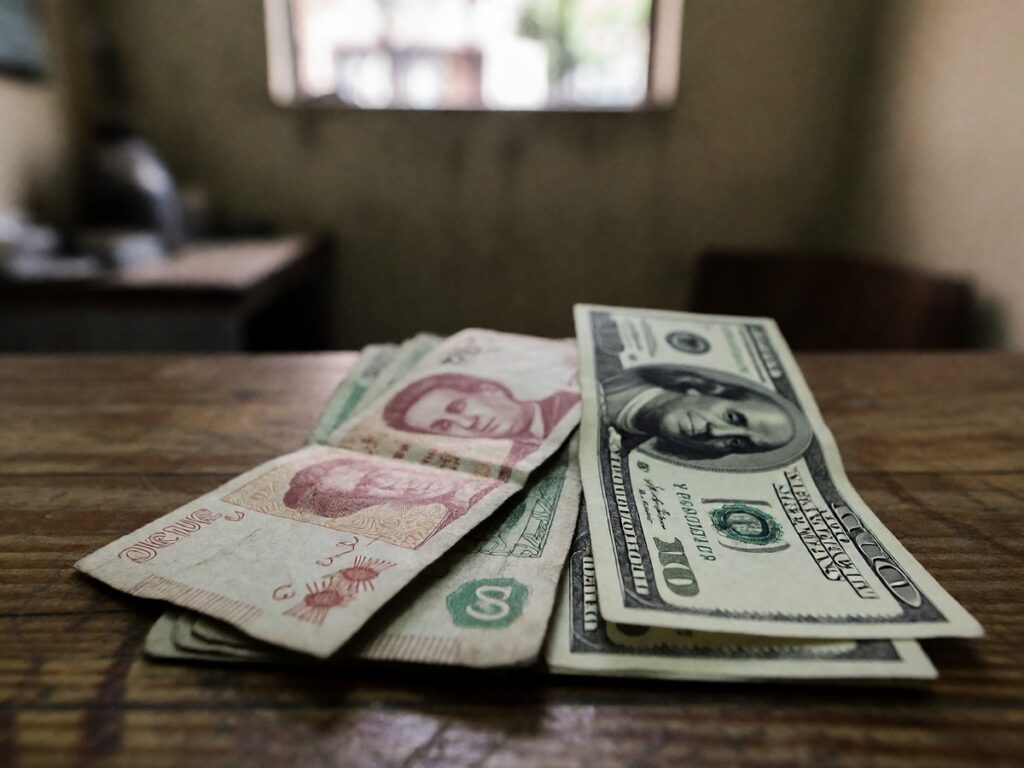
    The exchange rate convergence in 2026 suggests a tightening of the various markets. In June 2026, the Blue Dollar reached approximately 1,500 ARS per USD. The official rate sat at about 1,477 ARS per USD. The MEP rate matched the Blue Dollar at roughly 1,500 ARS per USD. These figures show that the historical gap between official and parallel rates has nearly vanished.

    Rate Type ARS per USD
    Official (BNA) ~1,470
    Blue Dollar ~1,500
    MEP Dollar ~1,480
    WanderWallet Rate ~1,520

    The gap closed.

    The new currency framework uses a crawling band to manage volatility. The upper limit of this band rises at 1% per month. The lower limit falls at 1% per month. This system debuted on January 2, 2026. It replaced the previous crawling peg that used a 2% monthly depreciation rate. This new approach allows for more flexibility, but it also removes a mechanical nominal anchor. The lagged indexation of the exchange rate to inflation can impart inertia to price increases. If the economy produces high inflation in one month, the depreciation rate in the following months will automatically accommodate it.

    The government attempts to build reserves through budget surpluses. Milei achieved a fiscal surplus in 2024. This followed deep cuts to salaries, pensions, and public investment. However, the government must also run surpluses to accumulate the dollars needed for debt repayment. These purchases often require the central bank to use pesos, which creates inflationary pressure. The central bank intends to maintain a contractionary monetary bias if inflation stays above international levels. This strategy remains difficult because money demand in Argentina fluctuates heavily. People switch easily between pesos and dollars when they lose confidence in the local currency.

    The cost of living remains a primary concern for the population. A Big Mac costs nearly 60% more in Argentina than in the United States. This reflects the overvalued status of the peso. The wide range of exchange rates also dictates how visitors and locals spend money. The Blue Dollar, or informal cash market, requires clean $100 bills and physical visits to exchange houses called cuevas. The MEP rate, derived from securities trading, applies to foreign cards. In 2026, the MEP rate remains very close to the Blue Dollar.

    You know how quickly Argentine markets move during election cycles.

    The differences in exchange methods involve specific costs and convenience levels. Using a foreign credit card involves an MEP rate that usually lags the Blue Dollar by 2-3%. Card companies also charge fees ranging from 2.8% to 6% on average. Travelers often use WanderWallet to access the Dolar Cripto rate through QR codes and Alias payments. This rate typically stays 3-5% better than the MEP rate. Using cash at a cueva involves a 1-3% spread between buy and sell rates.

    The program carries risks.

    The reliance on US Treasury support makes the program vulnerable to shifts in American political priorities. The US intervention aims to support an ideological ally, but the market may eventually test the credibility of this political commitment. If the central bank cannot accumulate reserves, a negative economic shock could force a devaluation. Such a move would threaten the stability of the entire economic plan. The government needs to transition to a more sustainable strategy that does not rely on constant external liquidity.

    The political landscape in Argentina remains highly polarized. The 2025 midterm elections provided Milei with a strong plurality, which helped stabilize the market. However, the ability to sustain vetoes in Congress depends on the number of deputies in the lower house. A loss of political clout would make it difficult to maintain fiscal stabilization and deregulation. The current convergence of rates and the recent US support provided temporary relief.

    Will the central bank maintain the crawling peg if reserves continue to dwindle?

    The convergence of rates and the narrowing gap between the official and Blue Dollar suggests a move toward unification. The authorities continue to manage the exchange rate to anchor inflation expectations. This strategy relies on the ability of the central bank to buy dollars without triggering massive peso selloffs. The stability of the peso remains tied to the success of the IMF program and the continued support of the US Treasury.